49/08, Nirala Residential Area, Khulna
contact@digitalexpertit.com
←Back to Articles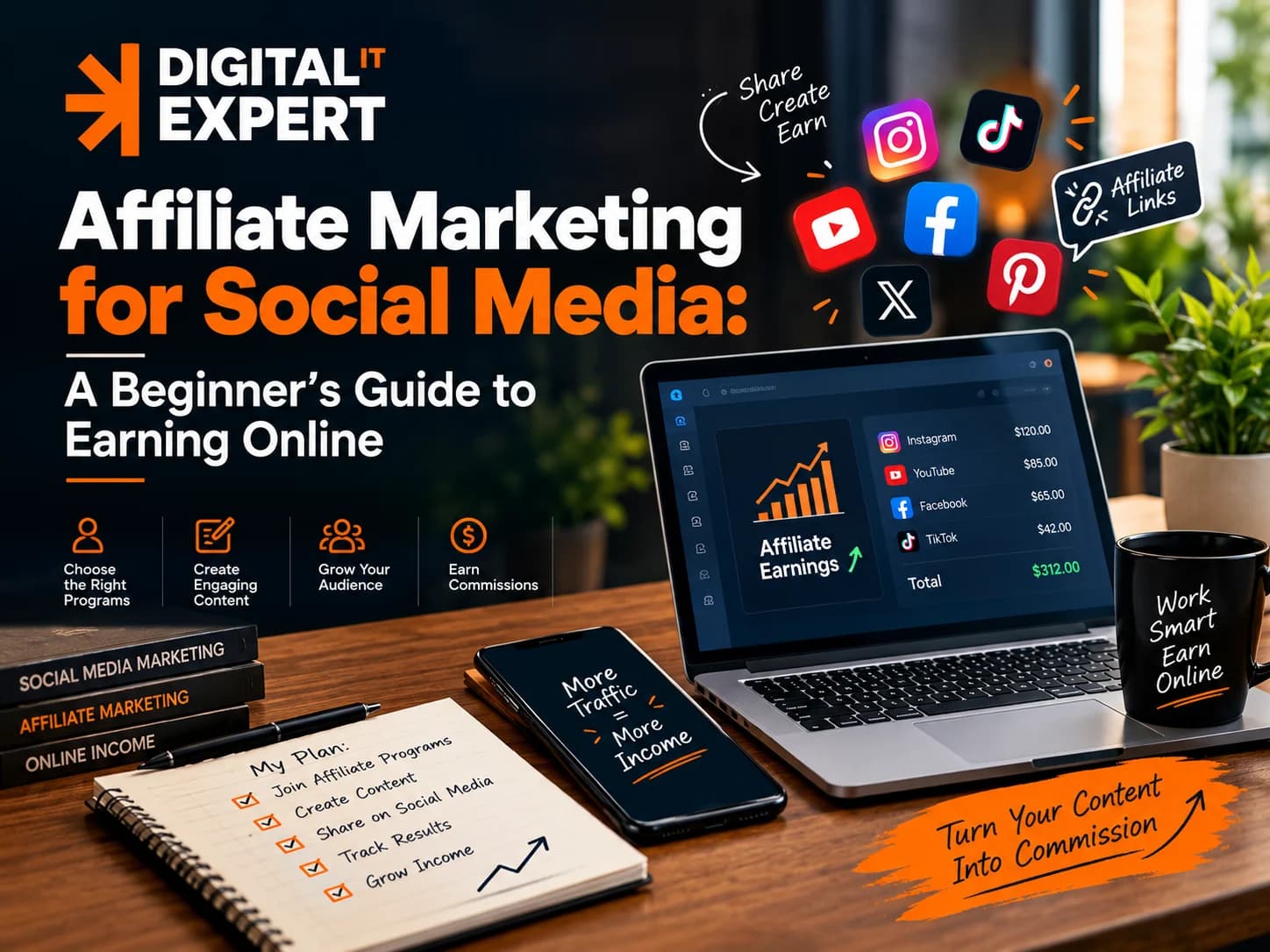 October 16, 202610 min read
Affiliate Marketing for Social Media: A Beginner’s Guide to Earning Online
D
Digital Expert IT
Author
Have you ever recommended a product to a friend and watched them buy it because they trusted your opinion? Affiliate marketing works on a similar principle, except you can earn a commission when someone purchases through your special referral link.
Today, social media makes this business model accessible to content creators, bloggers, small businesses, and beginners who want to build an online income stream. You don't necessarily need thousands of followers or expensive equipment to get started. What matters more is understanding your audience and recommending products that genuinely help them.
Affiliate marketing for social media combines useful content, audience relationships, and product recommendations to generate potential sales. Whether you're active on Instagram, Facebook, TikTok, YouTube, or Pinterest, you can use social platforms to reach people who may be interested in what you promote.
Let's explore how it works and how you can build a practical strategy from scratch.
What Is Affiliate Marketing for Social Media?
Affiliate marketing for social media is a marketing method in which creators or publishers promote another company's products or services through social media content. When someone completes a qualifying action through an affiliate link, the marketer may earn a commission.
For example, imagine you create content about home fitness. You publish a video explaining how to choose resistance bands and recommend a product that fits your audience's needs. If a viewer purchases through your affiliate link and the transaction qualifies under the program's terms, you receive a commission.
The process generally involves four steps:
- Join an affiliate program relevant to your niche.
- Receive a unique affiliate link or tracking code.
- Create useful content featuring the recommended product.
- Earn commissions on qualifying purchases or other approved actions.
The merchant handles the product, payment, and fulfillment. Your job is to attract the right audience and help people make informed purchasing decisions.
Why Use Social Media for Affiliate Marketing?
Social media gives affiliate marketers access to communities built around shared interests, hobbies, and purchasing needs.
Instead of waiting for people to discover a website through search engines, you can introduce products through videos, tutorials, reviews, and conversations.
Here are three important benefits.
Direct audience engagement: Comments, messages, polls, and questions help you understand what people want to know before buying.
Multiple content formats: You can demonstrate a product through a short video, explain its benefits in a carousel, or publish a detailed review on YouTube.
Low-cost entry: Many platforms allow you to begin creating organic content without paying for advertising. You still need to invest time in research, production, and audience development.
However, social media doesn't guarantee sales. Reach can fluctuate, algorithms change, and an engaged audience won't necessarily purchase every product you recommend.
Best Social Media Platforms for Affiliate Marketing
The right platform depends on your niche, content style, and target audience. You don't need to use every platform at once.
1. Instagram
Instagram works well for visual products, lifestyle recommendations, beauty, fashion, fitness, and educational content.
You can create Reels demonstrating products, publish carousel comparisons, and use Stories to answer common questions. Where account features and program rules permit, you can direct interested followers to affiliate links.
For better results, focus on solving a specific problem rather than publishing promotional posts repeatedly.
2. Facebook
Facebook can be useful for reaching niche communities and building relationships with potential customers.
You might share tutorials, product comparisons, helpful posts, or videos on a relevant Page. Groups can also provide insight into customer questions, but always follow group rules and avoid unsolicited promotional links.
3. TikTok
TikTok is particularly useful for short, engaging product demonstrations and quick educational videos.
A simple video showing how a product works can communicate more than a long sales pitch. Try answering common questions, comparing features, or explaining who would benefit from a particular product.
Before posting affiliate content, check the platform's current commercial-content requirements and the affiliate program's promotion rules.
4. YouTube
YouTube supports both short-form videos and detailed reviews.
You can create tutorials, product comparisons, setup guides, and “best products for beginners” videos. These formats help viewers understand a product before deciding whether to purchase it.
Include relevant affiliate links in permitted locations and clearly disclose your relationship with the merchant.
5. Pinterest
Pinterest can be useful for niches such as home decor, recipes, fashion, crafts, and planning.
Create useful pins that lead to relevant content or approved product pages. Clear visuals, descriptive titles, and keyword-focused descriptions can help people discover your content through searches within the platform.
Always check the applicable affiliate program and platform policies before publishing links.
How to Start Affiliate Marketing on Social Media
Starting becomes much easier when you follow a clear plan instead of promoting random products.
Step 1: Choose a Specific Niche
Your niche determines the audience you attract and the products you recommend.
Popular options include technology, skincare, fitness, home improvement, personal finance, travel, and digital tools.
Rather than targeting everyone interested in technology, for example, focus on software tools for freelancers or affordable gadgets for students.
A specific niche makes it easier to develop relevant content and build credibility over time.
Step 2: Find Suitable Affiliate Programs
Look for programs that offer products your audience genuinely needs.
You can explore established affiliate networks, individual company programs, software referral programs, and online retailers with affiliate partnerships.
Before joining, review the commission structure, payment conditions, cookie duration, eligible countries, and promotional restrictions. A high commission isn't automatically a good deal if the product is unsuitable for your audience.
Step 3: Create Helpful Content
Your content should answer questions people have before making a purchase.
For instance, if you promote website-building software, you could publish:
- A beginner's tutorial explaining how to use it.
- A comparison of two popular tools.
- A list of features worth considering.
- An honest review covering advantages and limitations.
- A demonstration showing how the software solves a real problem.
This approach helps you earn attention through usefulness rather than constant selling.
Step 4: Build Trust Before Promoting
People are more likely to consider recommendations when they believe the creator understands the product and their needs.
Be honest about what a product does well and where it falls short. Whenever possible, test products before reviewing them. Never invent personal experiences or promise results you cannot substantiate.
You should also clearly disclose affiliate relationships near your recommendations. For example: “I may earn a commission if you purchase through this link, at no additional cost to you.”
The U.S. Federal Trade Commission provides guidance on making these disclosures clear and easy to notice. Other countries may have additional requirements.
Step 5: Track Your Results
Monitor more than likes and followers.
Useful metrics include link clicks, click-through rate, conversions, earnings per click, and approved commission revenue.
If a video receives thousands of views but very few link clicks, your call to action may be unclear. If people click but don't purchase, consider whether the product, landing page, price, or audience targeting needs improvement.
Use these insights to refine your content instead of repeating the same strategy without evidence.
Common Affiliate Marketing Mistakes to Avoid
Several mistakes can slow down your progress.
Promoting too many products: Random recommendations make it difficult to establish a clear identity. Focus on products that fit your niche.
Posting links without context: Explain why a product matters, who it suits, and what problem it solves.
Buying fake followers: Inflated follower counts don't create genuine purchasing intent and can undermine credibility.
Ignoring disclosure requirements: Make commission relationships clear where the recommendation appears. Don't hide disclosures in a profile bio or at the end of a long caption.
Expecting instant income: Affiliate marketing requires research, consistent publishing, testing, and patience. Earnings are never guaranteed.
How Digital Marketing Can Improve Affiliate Results
Affiliate marketing becomes more effective when content creation is supported by a broader marketing strategy.
Search engine optimization can help people discover detailed product guides. Social media management can maintain a consistent publishing schedule. Video editing can make demonstrations easier to follow, while analytics and conversion optimization can reveal which content attracts qualified visitors.
Businesses looking to strengthen these areas can explore Digital Expert IT for web development, SEO, digital marketing, and related online growth solutions.
A well-structured website can also complement social media by hosting in-depth reviews, comparison articles, tutorials, and useful resources. To explore professional support for these activities, visit Digital Expert IT's digital services.
The goal is to build a connected marketing system rather than depend entirely on one social platform.
Conclusion
Affiliate marketing for social media offers a practical way to monetize useful content by connecting audiences with relevant products and services.
You don't need to be famous to begin. Start with a focused niche, choose trustworthy affiliate programs, create content that answers real questions, and measure what works. Be transparent about commissions and prioritize your audience's needs over short-term clicks.
Most importantly, give the process time. A consistent strategy built around credibility and useful recommendations is a stronger foundation than chasing viral posts or promising overnight income.
FAQs About Affiliate Marketing for Social Media
1. What is affiliate marketing for social media?
It is a marketing strategy in which creators promote products or services through social platforms and earn commissions when users complete qualifying purchases or other approved actions through their referral links.
2. Which social media platform is best for affiliate marketing?
Instagram, Facebook, TikTok, YouTube, and Pinterest can all work. The best choice depends on your niche, audience, content format, and the platform and affiliate program rules.
3. Can beginners do affiliate marketing on social media?
Yes. Beginners can start by choosing a niche, joining a suitable affiliate program, and publishing useful content. You don't need a large following, but building trust and attracting relevant visitors takes time.
4. How do I promote affiliate links on social media?
Create tutorials, honest product reviews, demonstrations, comparison posts, and educational videos. Add your affiliate links only in permitted locations and clearly disclose your commission relationship.
5. Can I do affiliate marketing on social media without a website?
Yes. Some affiliate programs allow promotion directly through approved social media accounts. However, a website can provide more space for detailed reviews, search traffic, and helpful resources. Always check the specific program's requirements.
6. How many followers do I need for social media affiliate marketing?
There is no universal follower requirement. Some programs have minimum audience or account requirements, while others are more accessible. A smaller, relevant audience can sometimes generate more qualified clicks than a large but uninterested following.
7. Is affiliate marketing on social media free?
You can often begin with free accounts and organic content, although you'll invest time and may eventually pay for tools, equipment, or advertising. Paid promotion should only be used when permitted by the platform and affiliate program.
8. How long does it take to earn money from affiliate marketing?
There is no guaranteed timeline. Results depend on your niche, audience, content quality, product demand, and conversion rates. Some marketers make sales relatively early, while others need months of consistent testing and improvement.
9. Do I need to disclose affiliate links on social media?
Yes, when disclosure is required by applicable rules, clearly explain that you may earn a commission or receive another benefit. Place the disclosure where people can easily notice it alongside the recommendation, and follow the relevant platform and affiliate program policies.