49/08, Nirala Residential Area, Khulna
contact@digitalexpertit.com
←Back to Articles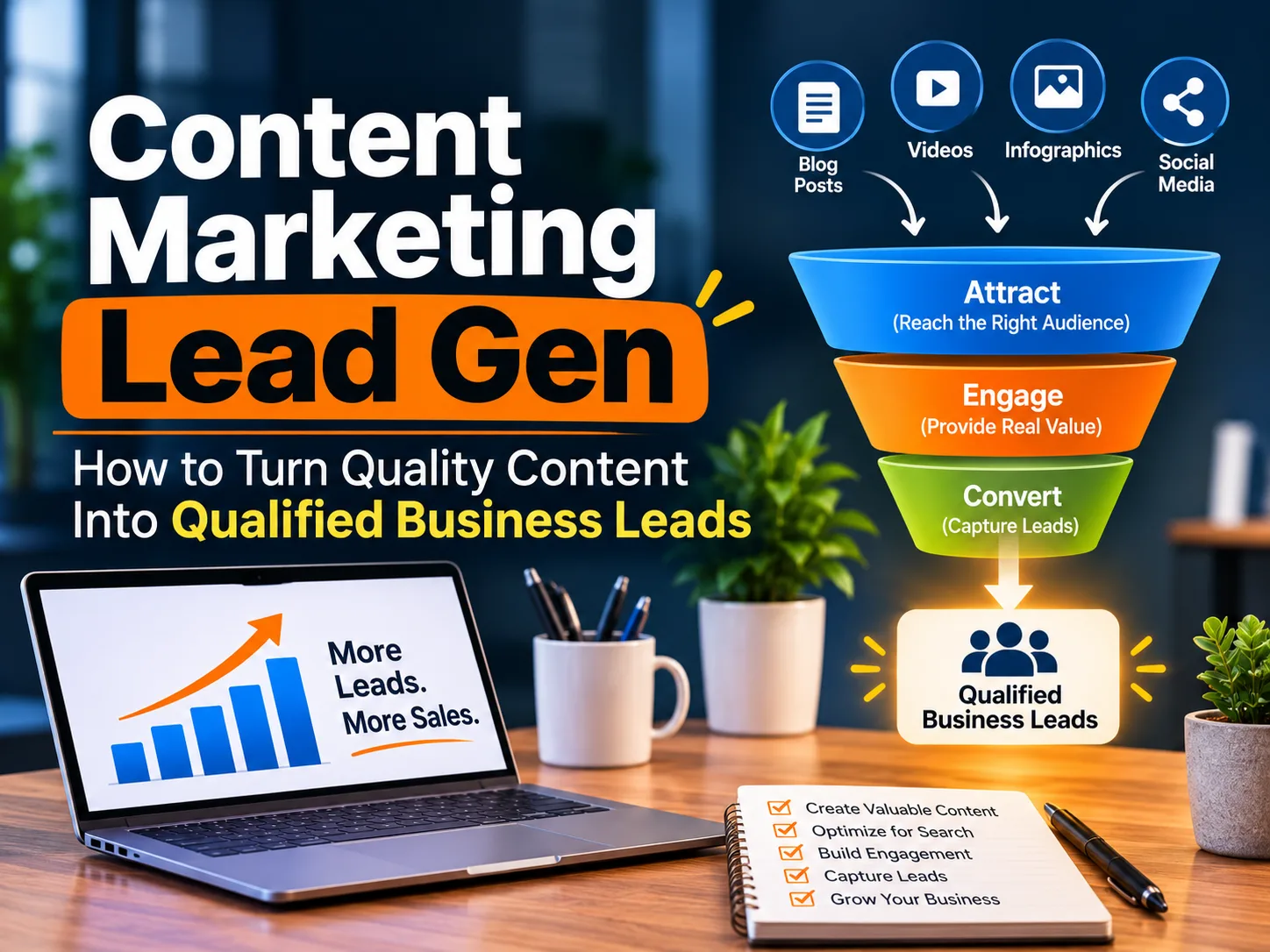 November 2, 20269 min read
Content Marketing Lead Gen: How to Turn Quality Content Into Qualified Business Leads
D
Digital Expert IT
Author
Getting website traffic is great, but what happens when visitors leave without contacting your business? This is a common challenge for companies investing in digital marketing. Publishing blog posts, sharing social media updates, and creating videos can increase visibility, but visibility alone doesn't guarantee business growth.
That's where content marketing lead gen becomes important.
Instead of creating content simply to attract views, businesses can use a strategic content marketing approach to attract potential customers, build trust, and encourage meaningful actions. Whether you're running a small business, an e-commerce store, or a B2B company, the right content can help turn interested visitors into valuable leads.
Let's explore how content marketing generates leads and which strategies can help your business get better results.
What Is Content Marketing Lead Generation?
Content marketing lead generation is the process of attracting potential customers through valuable and relevant content, then encouraging them to share their contact information or take the next step toward becoming customers.
Rather than directly pushing products or services, businesses provide helpful information that addresses their audience's questions, challenges, and interests.
For example, a web development company might publish articles about website performance, create videos explaining common website mistakes, or offer a free website audit. Someone searching for these solutions may discover the business, explore its services, and eventually request a consultation.
That's how content marketing connects audience interest with business opportunities.
Why Is Content Marketing Important for Lead Generation?
People rarely purchase a service immediately after discovering a business. They usually research their options, compare providers, read reviews, and look for evidence that a company understands their needs.
Content helps businesses become part of that decision-making process.
Here are some important benefits:
Builds trust and credibility: Helpful articles, detailed guides, and real-world examples demonstrate knowledge and establish your brand as a reliable resource.
Attracts targeted visitors: SEO-focused content helps reach people who are already searching for information related to your products or services.
Supports long-term growth: Unlike some paid campaigns that stop generating traffic when the budget runs out, valuable evergreen content can continue attracting visitors over time.
Improves customer engagement: Educational content gives potential customers more reasons to interact with your brand before making a purchase decision.
Generates qualified leads: When content addresses specific customer problems, it can attract people who are more likely to need your solution.
7 Content Marketing Strategies to Generate More Leads
A successful content marketing lead gen strategy requires more than publishing articles regularly. Every piece of content should serve a purpose and guide readers toward a relevant next step.
1. Create SEO-Optimized Blog Content
Blogging remains one of the most practical ways to attract potential customers through organic search.
Start by researching the keywords your target audience uses when looking for solutions. Focus on topics that connect directly with your business offerings.
For example, a digital marketing agency could publish articles about SEO strategies, social media advertising, website optimization, and conversion improvement.
Include relevant keywords naturally in your headings, introduction, meta title, and content. More importantly, answer the reader's question clearly.
A well-structured blog post can attract search traffic while introducing visitors to your expertise.
2. Use Lead Magnets to Capture Contact Information
Sometimes visitors need an additional reason to share their email addresses.
A lead magnet provides something useful in exchange for contact information.
Popular examples include:
- Free ebooks and downloadable guides
- Industry reports and research
- Website audit checklists
- Marketing templates
- Free consultation sessions
- Educational webinars
For example, a marketing agency could offer a free SEO checklist to business owners who want to improve their website visibility.
The key is relevance. Your lead magnet should solve a specific problem that your ideal customers actually have.
3. Create Engaging Video Content
Not everyone prefers reading long articles. Some people understand information more easily through videos.
Educational videos, product demonstrations, tutorials, and customer testimonials can help businesses explain their offerings in a more engaging way.
You don't necessarily need expensive production equipment. Short videos answering common customer questions can be enough to introduce your brand and encourage viewers to explore your services.
Include a clear call to action, such as visiting your website, downloading a resource, or requesting more information.
4. Use Social Media to Distribute Your Content
Creating excellent content is only half the job. You also need to make sure the right audience sees it.
Platforms like LinkedIn, Facebook, Instagram, and YouTube provide opportunities to distribute content and connect with potential customers.
Instead of sharing only promotional messages, try posting educational carousels, industry insights, short videos, customer success stories, and practical tips.
For B2B companies, LinkedIn can be particularly useful for reaching business owners and decision-makers.
Remember, social media engagement becomes more valuable when it encourages visitors to take meaningful actions beyond simply liking a post.
5. Build an Email Marketing Strategy
Not every potential customer is ready to purchase immediately. Some need additional information before making a decision.
Email marketing helps maintain communication with these prospects.
You can create automated email sequences that deliver helpful resources, share relevant articles, explain your services, and introduce customer success stories.
For example, someone downloading a website optimization guide could receive follow-up emails about website speed, SEO improvements, and conversion optimization.
Keep your messages relevant and avoid overwhelming subscribers with unnecessary promotions.
6. Create Case Studies and Customer Success Stories
People want to know whether a business can actually deliver what it promises.
Case studies help answer that question by showing how a product or service solved a real customer problem.
A useful case study typically explains the original challenge, the solution provided, the implementation process, and measurable results when available.
This type of content is particularly valuable for businesses offering professional services, software solutions, consulting, and web development.
It gives potential customers practical reasons to trust your business.
7. Optimize Landing Pages for Conversions
Your content may attract hundreds of visitors, but a poorly designed landing page can prevent those visitors from becoming leads.
A conversion-focused landing page should communicate your offer clearly and make the next step obvious.
Include a compelling headline, concise benefits, relevant proof, a clear call to action, and a simple contact form.
Avoid unnecessary distractions. If someone arrives after reading an article about SEO services, direct them toward relevant SEO information rather than a generic homepage.
A consistent experience between your content and landing page can make the conversion journey much smoother.
How to Measure Content Marketing Lead Generation Results
Publishing content without measuring performance makes it difficult to understand what's working.
Instead of focusing only on page views and social media likes, monitor metrics that connect content with actual business outcomes.
Important metrics include:
- Organic traffic: How many visitors discover your content through search engines?
- Conversion rate: What percentage of visitors complete a desired action?
- Lead volume: How many inquiries or contact submissions does your content generate?
- Cost per lead: How much are you spending to acquire each lead?
- Lead quality: Are the people contacting your business relevant to your services?
- Customer acquisition: How many leads eventually become paying customers?
Google Analytics 4, Google Search Console, and a suitable CRM can help you understand visitor behavior and track your marketing performance.
The goal isn't simply to generate more leads. It's to generate leads that have a genuine interest in your business.
Common Content Marketing Lead Gen Mistakes to Avoid
Even businesses that publish content consistently can struggle to generate leads.
One common mistake is creating content without understanding the target audience. If your articles don't address real customer problems, they may attract visitors who have no interest in your services.
Another issue is using overly promotional content. People generally want useful information before they want a sales pitch.
Businesses also frequently overlook calls to action, landing page optimization, and follow-up communication.
Finally, don't expect every blog post to generate immediate inquiries. Content marketing requires consistency, testing, and ongoing improvement.
Conclusion
Content marketing lead gen is about turning useful information into meaningful business opportunities. When SEO, blogging, social media, video marketing, email campaigns, and conversion-focused landing pages work together, businesses can create a sustainable system for attracting and nurturing potential customers.
The most effective strategy starts with understanding your audience. Identify their challenges, create content that genuinely helps them, and provide a clear path toward your products or services.
Remember, successful content marketing isn't about publishing more content. It's about publishing the right content for the right people at the right time.
When every piece of content has a clear purpose, your marketing efforts can do more than generate traffic—they can help your business build relationships, earn trust, and generate qualified leads.
FAQs About Content Marketing Lead Generation
1. What is content marketing lead generation?
Content marketing lead generation is the process of attracting potential customers through useful content, such as blog posts, videos, guides, and social media updates, and converting their interest into business inquiries or contact information.
2. How does content marketing help generate leads?
Content marketing attracts people who are interested in specific topics or solutions. By providing helpful information, offering relevant resources, and including clear calls to action, businesses can encourage visitors to become leads.
3. What type of content generates the most leads?
Lead-generating content varies by industry and audience. However, case studies, educational blog posts, ebooks, webinars, comparison guides, free tools, and service-focused landing pages can be effective when they match customer needs and buying intent.
4. Is SEO important for content marketing lead generation?
Yes. SEO helps potential customers discover your content through relevant search queries. Optimizing articles, landing pages, and website content can increase organic visibility and attract visitors who are actively looking for solutions.
5. How can small businesses generate leads through content marketing?
Small businesses can start with SEO-friendly blog posts, educational social media content, email newsletters, customer testimonials, and simple lead magnets. Focusing on a specific audience and consistently addressing its problems can help generate relevant inquiries.
6. What is the difference between content marketing and lead generation?
Content marketing focuses on attracting and educating an audience through valuable information. Lead generation focuses on identifying and converting interested prospects into potential customers. Combining both creates a more effective marketing strategy.
7. How long does content marketing take to generate leads?
The timeline depends on competition, content quality, website authority, distribution, and marketing consistency. Paid content promotion may generate inquiries sooner, while organic SEO and blogging generally require ongoing effort before producing consistent results.
8. How do you measure content marketing lead generation success?
Track organic traffic, conversion rates, form submissions, qualified leads, cost per lead, and customer acquisition. These metrics help determine whether your content is attracting the right audience and contributing to business growth.