49/08, Nirala Residential Area, Khulna
contact@digitalexpertit.com
←Back to Articles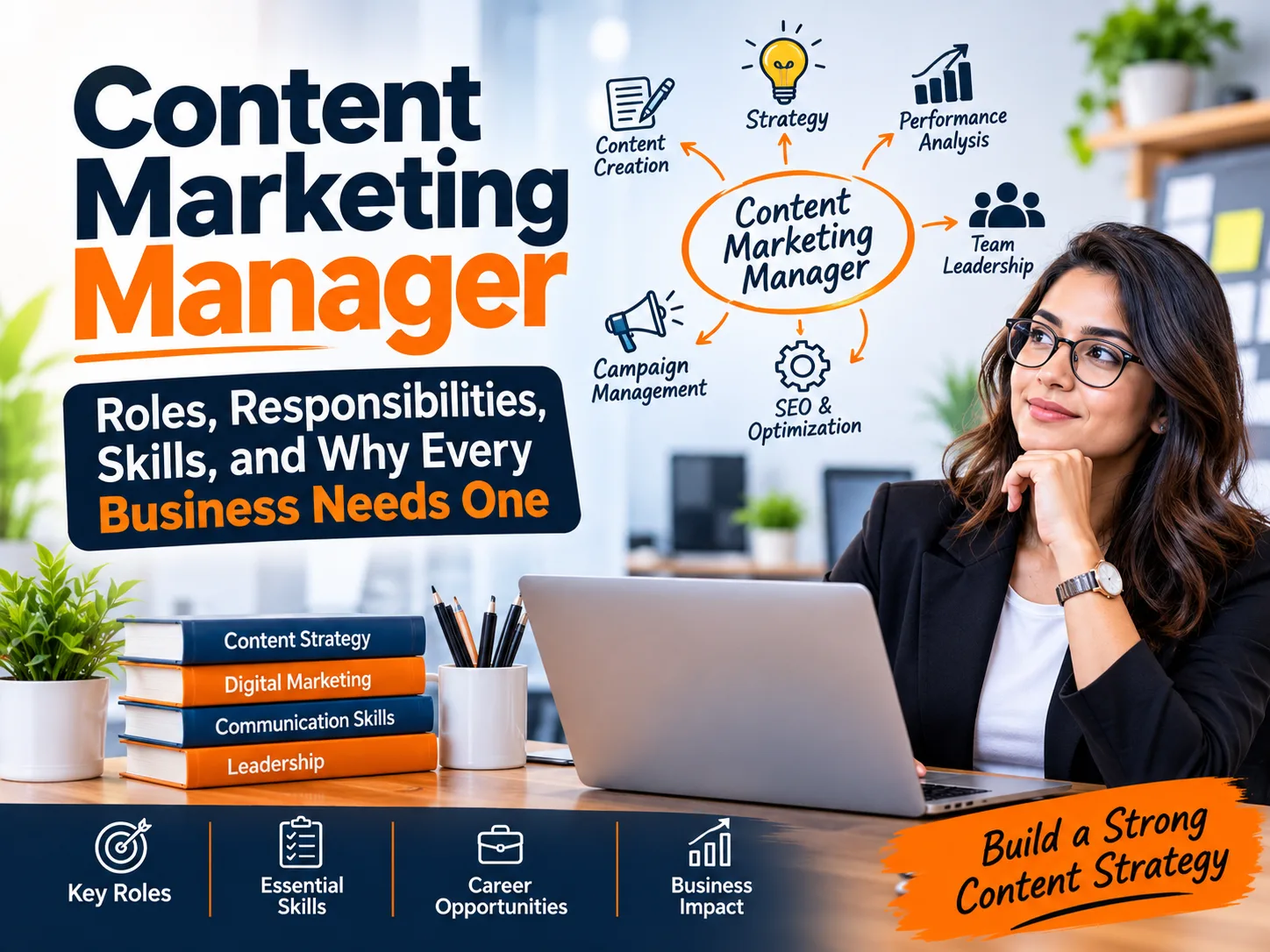 November 12, 20268 min read
Content Marketing Manager: Roles, Responsibilities, Skills, and Why Every Business Needs One
D
Digital Expert IT
Author
In today's competitive digital landscape, publishing content is easy. Creating content that attracts the right audience, builds trust, and generates customers is a different challenge. Businesses need more than occasional blog posts or social media updates to stand out online. They need a clear strategy, consistent communication, and content that supports real business goals.
This is where a content marketing manager becomes essential.
Whether a company wants to increase website traffic, improve brand awareness, generate qualified leads, or strengthen its online reputation, the right content strategy can make a significant difference. A content marketing manager brings these activities together, ensuring every piece of content has a purpose and reaches the right audience.
But what does this role actually involve, and why is it becoming increasingly important for modern businesses?
What Is a Content Marketing Manager?
A content marketing manager is a professional responsible for planning, developing, managing, and optimizing a company's content marketing activities. Their primary goal is to connect valuable content with the right audience while supporting the company's marketing and business objectives.
Rather than focusing only on writing articles or publishing social media posts, they oversee the complete content process.
This may include website content, SEO blog articles, email campaigns, social media posts, video content, case studies, and downloadable resources.
For example, a software company might want to attract more business customers. A content marketing manager could develop educational blog posts, create LinkedIn campaigns, coordinate product videos, and plan email newsletters to guide potential customers toward a purchase.
In simple terms, they turn content into a strategic business asset.
Key Responsibilities of a Content Marketing Manager
The responsibilities of a content marketing manager can vary depending on the company's size and industry. However, several important tasks are common across most organizations.
1. Developing a Content Marketing Strategy
A successful content campaign starts with a clear plan. The manager identifies the target audience, understands their interests, researches competitors, and determines which content formats will deliver the best results.
They also establish measurable goals, such as increasing organic website traffic, improving engagement, or generating more leads.
2. Managing Content Creation
Content production involves more than writing. It requires coordination between writers, editors, graphic designers, video creators, and marketing specialists.
A content marketing manager ensures that every piece of content follows the brand's messaging, maintains quality standards, and communicates useful information.
3. SEO and Keyword Research
Search engine optimization is an important part of content marketing. Managers research relevant keywords, understand search intent, identify content opportunities, and ensure website content follows SEO best practices.
They also work on internal linking, content structure, headings, and existing article optimization to improve search visibility.
4. Managing Social Media Content
Publishing content on social media helps businesses reach potential customers beyond search engines.
A content marketing manager plans social media campaigns, maintains publishing schedules, coordinates creative materials, and monitors audience engagement across relevant platforms.
5. Tracking Performance and Results
Creating content without measuring its performance makes it difficult to understand what works.
Managers use analytics tools to monitor organic traffic, engagement, conversions, lead generation, and other relevant KPIs. They use these insights to improve future campaigns and make better marketing decisions.
Essential Skills Every Content Marketing Manager Should Have
Being successful in this position requires a combination of creativity, communication, organization, and analytical thinking.
Some of the most valuable skills include:
- Content strategy: Understanding how to create content that supports business objectives.
- SEO knowledge: Knowing how keyword research, search intent, and on-page optimization work.
- Writing and editing: Producing clear, engaging, and informative content.
- Social media management: Understanding different platforms and their audiences.
- Analytical skills: Interpreting performance data and identifying opportunities.
- Project management: Organizing deadlines, campaigns, resources, and publishing schedules.
- Communication: Working effectively with writers, designers, clients, and marketing teams.
- Creative thinking: Developing fresh content ideas that make a brand stand out.
Technology is also changing the way marketing teams work. Familiarity with AI-assisted research, content planning, analytics platforms, and marketing automation can help managers improve productivity without sacrificing content quality.
Why Does Your Business Need a Content Marketing Manager?
Many businesses publish content regularly but struggle to turn their efforts into measurable results. Sometimes the problem isn't a lack of content; it's the absence of a consistent strategy.
A dedicated content marketing manager helps solve this problem in several ways.
Builds brand awareness: Consistent, valuable content helps people recognize your business and understand what makes your services different.
Improves organic visibility: SEO-focused content creates opportunities to attract visitors who are actively searching for your products or services.
Generates qualified leads: Educational articles, landing pages, and useful resources help potential customers discover solutions and take the next step.
Creates consistent brand messaging: A structured content strategy ensures that your website, social media, emails, and advertisements communicate a consistent message.
Supports long-term growth: Unlike short-lived promotional campaigns, useful evergreen content can continue attracting visitors long after publication.
For businesses that want to strengthen their online presence, Digital Expert IT offers digital solutions designed to support website visibility, brand development, and business growth.
Content Marketing Manager vs. Content Creator: What's the Difference?
These two roles are closely connected, but they serve different purposes.
A content creator focuses primarily on producing individual pieces of content, such as videos, graphics, blog posts, or social media updates.
A content marketing manager takes a broader approach. They decide what content should be created, who it should target, which platforms should distribute it, and how its performance will be measured.
For example, a content creator might produce an Instagram carousel about website design. The content marketing manager determines why that topic matters, how it fits the campaign, what audience it should reach, and what action viewers should take afterward.
Both roles are valuable, but they work best when they support the same strategy.
How to Build an Effective Content Marketing Strategy
An effective strategy doesn't require publishing something every day. It requires understanding your audience and consistently delivering content that addresses their needs.
Here are five practical steps:
- Understand your audience: Research customer interests, challenges, buying behavior, and frequently asked questions.
- Choose relevant topics: Identify keywords and subjects that connect audience needs with your products or services.
- Create valuable content: Develop helpful articles, videos, graphics, and social media campaigns.
- Distribute strategically: Share content through search engines, social media, email marketing, and other relevant channels.
- Measure and improve: Review performance regularly and update your strategy based on actual results.
Businesses can also combine content marketing with SEO, paid advertising, video production, and conversion optimization to create a more connected marketing system. Exploring Digital Expert IT's digital marketing and web development services can help businesses understand how these services support their overall online growth.
Final Thoughts
A content marketing manager does much more than manage blog posts and social media calendars. They connect business goals with meaningful content, helping companies attract attention, build credibility, and develop stronger customer relationships.
As digital competition continues to grow, businesses need content that does more than fill their websites or social feeds. They need a strategy that delivers value to their audience and supports measurable results.
Whether you're building a marketing career or looking to improve your company's digital presence, understanding the role of a content marketing manager is a valuable starting point.
Ultimately, successful content marketing isn't about publishing more. It's about publishing with purpose.
Frequently Asked Questions (FAQs)
1. What does a content marketing manager do?
A content marketing manager plans, creates, manages, and optimizes a company's content strategy. Their responsibilities include SEO, content planning, social media campaigns, team coordination, and performance tracking.
2. What skills are required to become a content marketing manager?
Important skills include content strategy, SEO, writing and editing, social media management, communication, project management, and data analysis. Knowledge of digital marketing tools is also beneficial.
3. Is a content marketing manager responsible for SEO?
Yes. SEO is often an important responsibility. They work with keyword research, search intent, content optimization, internal linking, and performance analysis to improve organic visibility.
4. What is the difference between a content manager and a content marketing manager?
A content manager generally focuses on content production, editing, organization, and publishing. A content marketing manager has broader responsibilities, including marketing strategy, audience development, distribution, team management, and business performance.
5. How can a content marketing manager help a small business?
They help small businesses develop consistent messaging, attract relevant website visitors, improve brand awareness, generate leads, and create content that supports long-term marketing goals.
6. What tools does a content marketing manager use?
Common tools include Google Analytics 4, Google Search Console, WordPress, SEMrush, Ahrefs, Canva, Trello, Asana, and social media scheduling platforms. The choice depends on the company's marketing requirements.
7. Is content marketing a good career choice?
Yes. Content marketing offers opportunities across industries, including technology, e-commerce, healthcare, education, and professional services. Professionals can progress into senior marketing, content strategy, and digital marketing leadership roles.
8. How does content marketing help with business growth?
Content marketing helps businesses attract potential customers through useful information, build trust, improve search visibility, and guide audiences toward purchasing decisions. When combined with a strong marketing strategy, it can become an effective long-term growth channel.