49/08, Nirala Residential Area, Khulna
contact@digitalexpertit.com
←Back to Articles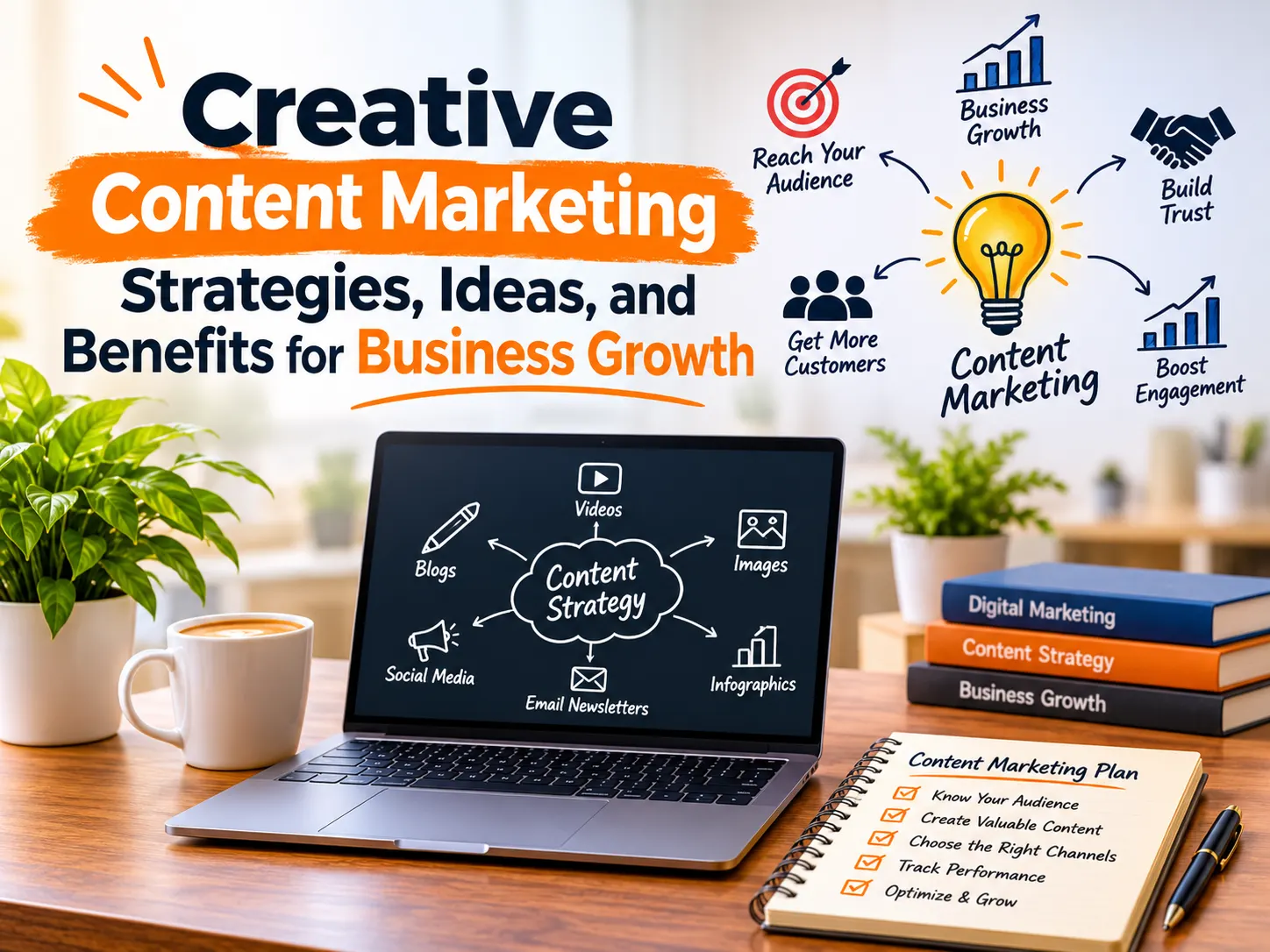 November 18, 202610 min read
Creative Content Marketing: Strategies, Ideas, and Benefits for Business Growth
D
Digital Expert IT
Author
Getting attention online has become harder than ever. People scroll through hundreds of social media posts, advertisements, videos, and articles every day. Most of that content disappears from their minds within seconds. So, how can a business stand out in such a crowded digital space?
The answer starts with creative content marketing.
Instead of constantly promoting products or services, businesses can use valuable, interesting, and original content to connect with their target audience. Whether it's an engaging video, an informative blog post, a creative social media campaign, or an eye-catching infographic, the right content can make people remember your brand.
But creating content just to stay active online isn't enough. You need a strategy that attracts attention, builds trust, and encourages potential customers to take action. Let's explore how creative content marketing works and how businesses can use it to grow.
What Is Creative Content Marketing?
Creative content marketing is the process of planning, creating, and sharing original, valuable, and engaging content to attract a specific audience and achieve business goals.
It combines creativity with marketing strategy. Rather than simply telling people why they should buy something, businesses create content that educates, entertains, inspires, or solves real problems.
Some common examples include:
- Educational blog articles and industry guides
- Short-form videos, Reels, and YouTube Shorts
- Creative social media posts and carousels
- Infographics and visual storytelling
- Customer testimonials and success stories
- Email newsletters and interactive campaigns
- Behind-the-scenes videos and product demonstrations
The main idea is simple: give people a reason to pay attention to your brand before asking them to become customers.
Why Is Creative Content Marketing Important for Businesses?
A business can have excellent products and competitive prices, but without effective communication, potential customers might never discover its value.
Creative content helps bridge that gap. Here are some important reasons businesses should invest in it.
1. Builds Strong Brand Awareness
People are more likely to remember a brand that consistently shares useful and recognizable content.
For example, a digital marketing agency could publish weekly tips about SEO, website performance, social media growth, and online advertising. Over time, its audience begins to associate the brand with helpful marketing knowledge.
This kind of consistent visibility helps businesses stay memorable.
2. Builds Trust With Potential Customers
Most customers don't make purchasing decisions immediately. They research options, compare services, and look for businesses they can trust.
Helpful content makes that process easier.
Sharing practical advice, answering common questions, presenting real customer experiences, and explaining your services can demonstrate expertise without making every post feel like an advertisement.
3. Improves SEO and Organic Traffic
Creative content marketing and search engine optimization work particularly well together.
When you publish informative, properly optimized articles, you create more opportunities for your website to appear in relevant search results.
Targeting the right keywords, answering search questions, improving readability, and connecting related pages through internal links can help search engines understand your website.
High-quality content can also attract backlinks and bring visitors who are actively looking for your products or services.
4. Generates More Qualified Leads
Not every website visitor is ready to purchase. Some are researching, while others are comparing different solutions.
Content can guide these visitors toward the next step.
For example, an informative article about website development could introduce readers to professional web development services. A clear call to action can then encourage interested visitors to request a consultation.
7 Creative Content Marketing Ideas to Grow Your Brand
You don't need an expensive production setup or a massive marketing team to create engaging content. Sometimes, a simple idea presented in the right way can produce excellent results.
Here are seven approaches worth trying.
1. Create Educational Short-Form Videos
Short videos are an effective way to communicate information quickly.
You can create Instagram Reels, TikTok videos, and YouTube Shorts explaining industry tips, answering frequently asked questions, or demonstrating how a product works.
For example, a web development company could publish a 30-second video showing five common website design mistakes.
Keep the message simple, use readable captions, and give viewers a reason to watch until the end.
2. Turn Customer Questions Into Content
Your customers are already giving you content ideas through their questions.
Think about the things people frequently ask before purchasing your products or services.
A restaurant could share food preparation tips, while an e-commerce business could create product comparison videos. A professional service provider could publish guides explaining its process.
This approach makes content more relevant because it addresses actual customer needs.
3. Use Visual Storytelling
Sometimes, a visual can explain something more effectively than several paragraphs.
Infographics, comparison graphics, animated illustrations, and carousel posts can help communicate complex information in an accessible way.
For instance, a marketing agency could create a carousel explaining the customer journey from discovering a brand to making a purchase.
Good visual storytelling makes information easier to understand and share.
4. Share Real Customer Experiences
People often want to know what happens after they purchase a product or hire a service.
Customer testimonials, project showcases, reviews, and case studies provide valuable social proof.
Instead of simply saying your service delivers results, explain the customer's challenge, the solution provided, and the outcome.
Always use genuine customer feedback and accurate results.
5. Experiment With Interactive Content
Interactive content encourages people to participate rather than simply consume information.
Some useful ideas include:
- Online quizzes and assessments
- Polls and question-based social posts
- Website calculators
- Product recommendation tools
- Interactive infographics
These formats can make your marketing experience more memorable while helping you understand your audience's preferences.
6. Repurpose Existing Content
You don't have to start from zero every time you publish something.
One detailed blog post can become several social media graphics, short videos, email tips, and carousel posts.
For example, a guide about SEO for small businesses could be divided into five short educational videos.
Repurposing saves production time and helps your message reach people across different platforms.
7. Develop a Consistent Brand Voice
Your content should sound and feel like it comes from the same business.
Choose a communication style that matches your audience. Some brands prefer a professional and educational tone, while others use friendly language and humor.
Consistency across your website, social media, videos, and emails helps create a recognizable brand identity.
How to Build an Effective Creative Content Marketing Strategy
Creative ideas are important, but they need direction. Without a proper plan, businesses can spend hours producing content without seeing meaningful results.
Follow these practical steps:
Step 1: Understand Your Target Audience
Identify your ideal customers, their interests, challenges, buying habits, and common questions. The better you understand them, the easier it becomes to create relevant content.
Step 2: Set Clear Marketing Goals
Decide what you want to achieve. Your goals might include increasing website traffic, improving brand awareness, generating leads, or increasing sales.
Step 3: Choose the Right Content Formats
Not every audience prefers the same type of content. Some people enjoy reading detailed articles, while others respond better to videos, graphics, or email newsletters.
Choose formats based on your audience and available resources.
Step 4: Create a Content Calendar
Plan your topics, publishing dates, platforms, and responsibilities in advance. A content calendar helps maintain consistency and reduces last-minute pressure.
Step 5: Measure and Improve Performance
Track important metrics such as website traffic, engagement, click-through rates, leads, and conversions. Use this information to identify what works and improve future campaigns.
Common Creative Content Marketing Mistakes to Avoid
Even a creative campaign can fail when the strategy is poorly planned.
Avoid these common mistakes:
- Creating content without a purpose: Every piece should support a clear audience need or business goal.
- Copying competitors: Use competitors for research, but develop your own perspective and ideas.
- Ignoring SEO: Creative content should also be discoverable through relevant search queries.
- Publishing inconsistently: A realistic publishing schedule is more effective than occasional bursts of activity.
- Focusing only on likes: Engagement is useful, but leads, conversions, and customer relationships matter too.
- Overusing automated content: AI tools can support content production, but human review, original insights, and brand expertise remain essential.
How Digital Marketing Services Can Support Your Content Strategy
Managing content across multiple platforms takes planning, creativity, and technical knowledge. Businesses often need support with content creation, video editing, social media management, SEO, and advertising to keep everything working together.
This is where professional digital marketing support can make a difference.
Digital Expert IT helps businesses strengthen their online presence through digital solutions designed to support visibility, engagement, and business growth.
From professional digital marketing and content-related services to website development and SEO, having the right strategy and execution can help turn creative ideas into measurable business opportunities.
Conclusion
Creative content marketing is more than publishing attractive graphics or posting videos regularly. It's about understanding your audience, communicating valuable ideas, and creating meaningful experiences that encourage people to connect with your brand.
Whether you're running a startup, managing an established company, or building an online business, a thoughtful content strategy can help you improve visibility, earn customer trust, and generate new opportunities.
Start with simple ideas, focus on quality, and pay attention to what your audience responds to. With consistency, creativity, and the right marketing approach, your content can become one of your business's most valuable long-term assets.
FAQs About Creative Content Marketing
1. What are the best creative content marketing ideas for small businesses?
Small businesses can start with educational social media posts, short-form videos, customer testimonials, blog articles, infographics, product demonstrations, and behind-the-scenes content. The best ideas are those that address customer needs and communicate the brand's value.
2. How does creative content marketing help business growth?
It helps businesses attract potential customers, increase brand awareness, improve audience engagement, build credibility, and generate leads. Consistently publishing useful content can also support long-term organic website traffic.
3. What are the most effective types of content marketing?
Some effective formats include blog posts, videos, social media carousels, infographics, email newsletters, case studies, and interactive content. The right combination depends on your target audience, industry, and marketing goals.
4. How often should a business publish marketing content?
There is no universal publishing frequency. Businesses should choose a realistic schedule they can maintain without sacrificing quality. Consistent publishing with useful information is generally more valuable than producing large amounts of low-quality content.
5. Is creative content marketing important for SEO?
Yes. High-quality, relevant content helps search engines understand your website's topics and gives users useful answers to their questions. Combining content creation with keyword research, search intent, internal linking, and technical SEO can strengthen organic visibility.
6. What is the difference between content marketing and creative content marketing?
Content marketing focuses on attracting and engaging audiences through valuable information. Creative content marketing adds originality, storytelling, innovative formats, and fresh presentation to make that information more interesting and memorable.
7. Can I use AI for creative content marketing?
Yes. AI tools can help with brainstorming, research, outlining, editing, and content repurposing. However, the final content should include accurate information, original perspectives, human judgment, and a consistent brand voice.
8. How do I measure creative content marketing success?
Measure performance using website traffic, search rankings, social engagement, video views, email clicks, lead generation, and conversions. Focus on metrics that connect directly to your business goals rather than relying only on likes and impressions.