49/08, Nirala Residential Area, Khulna
contact@digitalexpertit.com
←Back to Articles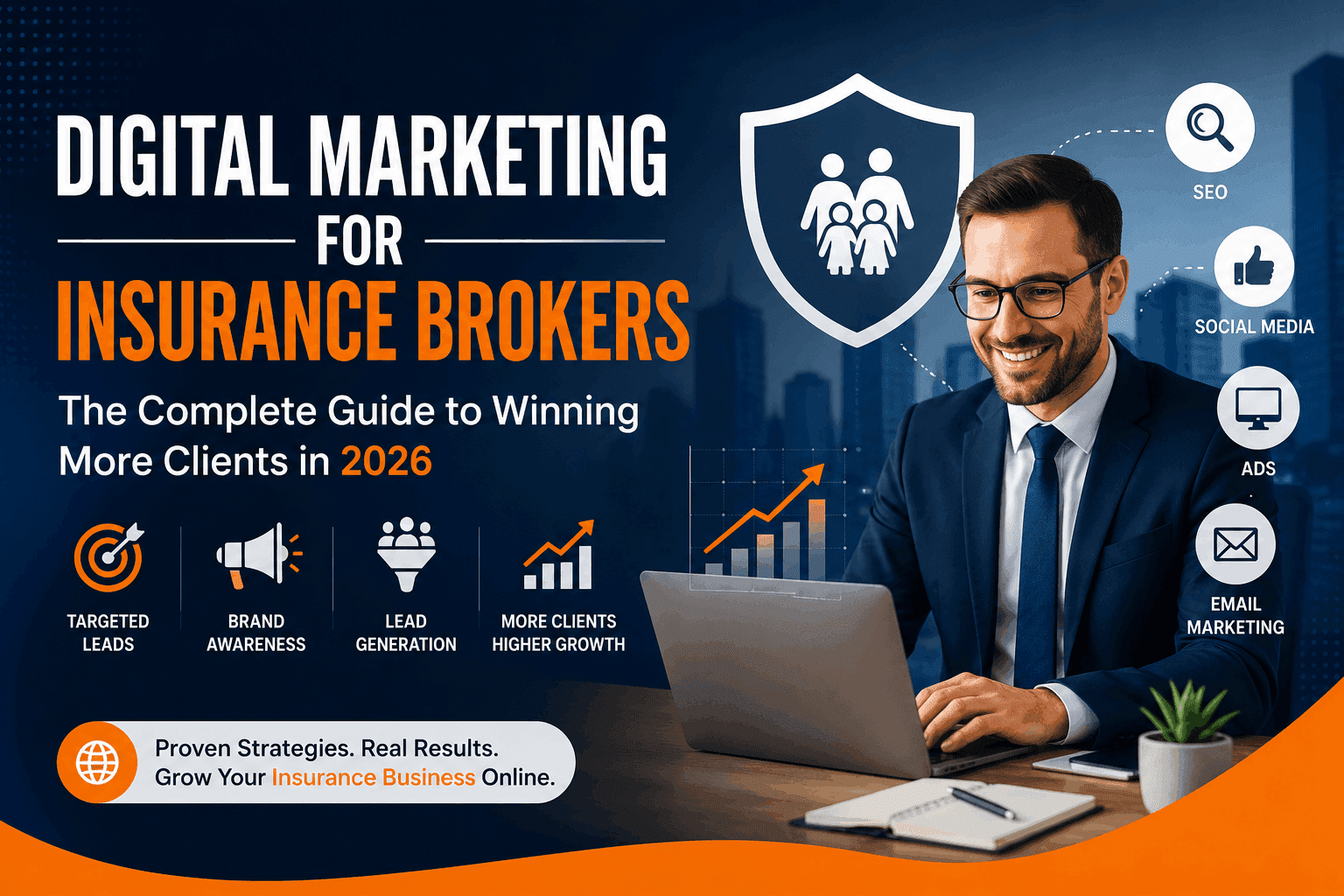 July 21, 20267 min read
Digital Marketing for Insurance Brokers: The Complete Guide to Winning More Clients in 2026
D
Digital Expert IT
Author
The insurance industry has changed dramatically over the last few years. Today's customers rarely choose an insurance broker by flipping through a phone directory or relying solely on referrals. Instead, they search online, compare providers, read reviews, visit websites, and interact with businesses on social media before making a decision.
This shift makes digital marketing for insurance brokers more important than ever. Whether you specialize in life insurance, health insurance, commercial coverage, auto insurance, or home insurance, having a strong digital presence can help you generate qualified leads, build trust, and grow your business consistently.
In this guide, we'll explore proven digital marketing strategies that insurance brokers can use to attract more clients, increase conversions, and stay ahead of competitors.
Why Digital Marketing Matters for Insurance Brokers
Modern consumers expect convenience and transparency. Before contacting a broker, they often research policies, compare rates, and evaluate credibility online.
A well-planned digital marketing strategy helps insurance brokers:
- Reach local and national audiences
- Generate high-quality leads
- Build authority within the insurance industry
- Increase website traffic
- Improve client retention
- Lower customer acquisition costs
- Stay competitive in a crowded marketplace
Unlike traditional advertising, digital marketing allows brokers to measure every campaign and continuously improve results based on real data.
Build a Professional, Trustworthy Website
Your website is often the first impression potential clients have of your business. An outdated or slow website can discourage visitors before they even contact you.
A successful insurance website should include:
- Fast loading speed
- Mobile-friendly design
- Clear service pages
- Easy quote request forms
- Client testimonials
- Contact information
- Educational blog content
- Secure browsing (HTTPS)
A professionally designed website also helps establish trust, which is one of the biggest factors influencing insurance purchasing decisions.
If you're looking for a conversion-focused website designed specifically to generate leads, explore the web development solutions offered by Digital Expert IT.
Focus on Local SEO
Most insurance brokers serve clients within specific cities or regions. That's why local SEO is one of the highest-return marketing strategies.
Optimize your business by:
- Claiming your Google Business Profile
- Collecting genuine customer reviews
- Using location-specific keywords
- Creating city-based landing pages
- Maintaining consistent business information across directories
For example, instead of targeting only:
- Insurance broker
Target phrases like:
- Insurance broker in Dallas
- Home insurance broker in Miami
- Commercial insurance broker near me
Local SEO helps your business appear when nearby customers actively search for insurance services.
Create Helpful Educational Content
Insurance can be confusing for many people. Educational content positions you as an expert while answering questions your audience already has.
Consider publishing articles like:
- How Much Life Insurance Do I Need?
- Home Insurance vs. Renters Insurance
- Business Insurance Explained
- Common Insurance Claim Mistakes
- How Insurance Deductibles Work
High-quality content not only improves SEO but also builds credibility and encourages visitors to trust your recommendations.
Invest in Google Ads
Organic traffic takes time, but Google Ads allows insurance brokers to appear at the top of search results immediately.
Some high-converting keywords include:
- Insurance broker near me
- Life insurance quotes
- Business insurance broker
- Health insurance advisor
- Commercial insurance specialist
Since these searches often come from users with strong purchase intent, paid search campaigns can produce qualified leads quickly when managed properly.
Use Social Media to Build Relationships
Insurance is a trust-based business. Social media allows brokers to build that trust before the first conversation.
Focus on platforms where your audience spends time:
- YouTube
Share valuable content such as:
- Insurance tips
- Industry news
- Client success stories
- Frequently asked questions
- Short educational videos
- Community involvement
The goal isn't simply gaining followers—it's building relationships that eventually become clients.
Email Marketing Still Delivers Strong ROI
Many prospects aren't ready to buy immediately. Email marketing helps you stay connected until they're ready.
Useful email campaigns include:
- Monthly insurance tips
- Renewal reminders
- Policy updates
- Seasonal coverage advice
- Exclusive promotions
- Educational newsletters
Consistent communication keeps your brokerage top of mind without being overly promotional.
Build Trust Through Reviews
Online reviews influence purchasing decisions more than ever.
Encourage satisfied clients to leave reviews on:
- Industry directories
Positive reviews improve local SEO while giving new prospects confidence in your services.
Always respond professionally to both positive and negative feedback.
Use Video Marketing
Video has become one of the most engaging forms of digital content.
Insurance brokers can create videos explaining:
- Insurance basics
- Policy comparisons
- Claim processes
- Frequently asked questions
- Customer testimonials
- Industry updates
Even short one-minute videos can significantly increase engagement across social media and your website.
Leverage Marketing Automation
As your brokerage grows, manual follow-up becomes difficult.
Marketing automation helps you:
- Send welcome emails
- Schedule appointment reminders
- Follow up with leads
- Nurture prospects
- Track customer interactions
Automation saves time while ensuring every lead receives timely communication.
Track Your Marketing Performance
Successful digital marketing relies on data rather than assumptions.
Key metrics to monitor include:
- Website traffic
- Lead conversion rate
- Cost per lead
- Search rankings
- Click-through rate
- Bounce rate
- Email open rate
- Return on advertising spend
Regular analysis allows you to improve campaigns and maximize your marketing budget.
Common Mistakes Insurance Brokers Should Avoid
Many insurance businesses struggle because they make avoidable marketing mistakes, including:
- Ignoring SEO
- Having an outdated website
- Not responding to online inquiries quickly
- Publishing inconsistent content
- Running ads without tracking conversions
- Neglecting online reviews
- Focusing only on selling instead of educating
Avoiding these mistakes gives your brokerage a significant competitive advantage.
Why Work with Digital Expert IT?
Digital marketing requires expertise, consistency, and ongoing optimization. Many insurance brokers simply don't have the time to manage SEO, advertising, content creation, website optimization, and analytics while serving clients.
Digital Expert IT specializes in helping businesses grow through customized digital marketing strategies, SEO, high-converting websites, paid advertising, content marketing, and performance optimization.
Conclusion
Digital marketing for insurance brokers is no longer optional—it's essential for sustainable business growth. Customers now expect brokers to have a professional online presence, valuable educational content, positive reviews, and easy ways to connect digitally.
By investing in SEO, local search optimization, content marketing, paid advertising, social media, email marketing, and conversion-focused websites, insurance brokers can consistently attract high-quality leads and build long-term client relationships.
The most successful brokers aren't necessarily those with the biggest advertising budgets. They're the ones who build trust, provide value, and remain visible wherever potential clients are searching online.
Frequently Asked Questions (FAQs)
1. Why is digital marketing important for insurance brokers?
Digital marketing helps insurance brokers reach potential clients online, generate qualified leads, improve brand visibility, and build long-term trust while reducing customer acquisition costs.
2. What is the best marketing strategy for insurance brokers?
A combination of local SEO, content marketing, Google Ads, social media marketing, email campaigns, and website optimization typically delivers the best results.
3. How can SEO help an insurance brokerage?
SEO improves your visibility in search engines, helping your brokerage appear when people search for insurance services in your target location.
4. Are Google Ads worth it for insurance brokers?
Yes. Google Ads target users actively searching for insurance services, making them one of the most effective lead-generation channels when campaigns are properly optimized.
5. Which social media platforms should insurance brokers use?
Facebook, LinkedIn, Instagram, and YouTube are excellent platforms for sharing educational content, building trust, and engaging with potential clients.
6. How often should insurance brokers publish blog content?
Publishing two to four high-quality blog posts each month helps improve SEO, answer customer questions, and establish authority in the insurance industry.
7. What should an insurance broker's website include?
A professional website should feature service pages, client testimonials, contact forms, educational resources, fast loading speed, mobile responsiveness, and clear calls to action.
8. How long does SEO take to produce results for insurance brokers?
Most businesses begin seeing measurable SEO improvements within three to six months, although highly competitive markets may take longer.
9. Can small insurance agencies compete with larger companies online?
Absolutely. With strong local SEO, valuable content, positive reviews, and targeted digital marketing, smaller agencies can successfully compete for qualified local leads.
10. What services does Digital Expert IT provide for insurance businesses?
Digital Expert IT offers SEO, custom web development, paid advertising, content marketing, website optimization, conversion tracking, and digital marketing solutions designed to help businesses generate more qualified leads and grow online.