49/08, Nirala Residential Area, Khulna
contact@digitalexpertit.com
←Back to Articles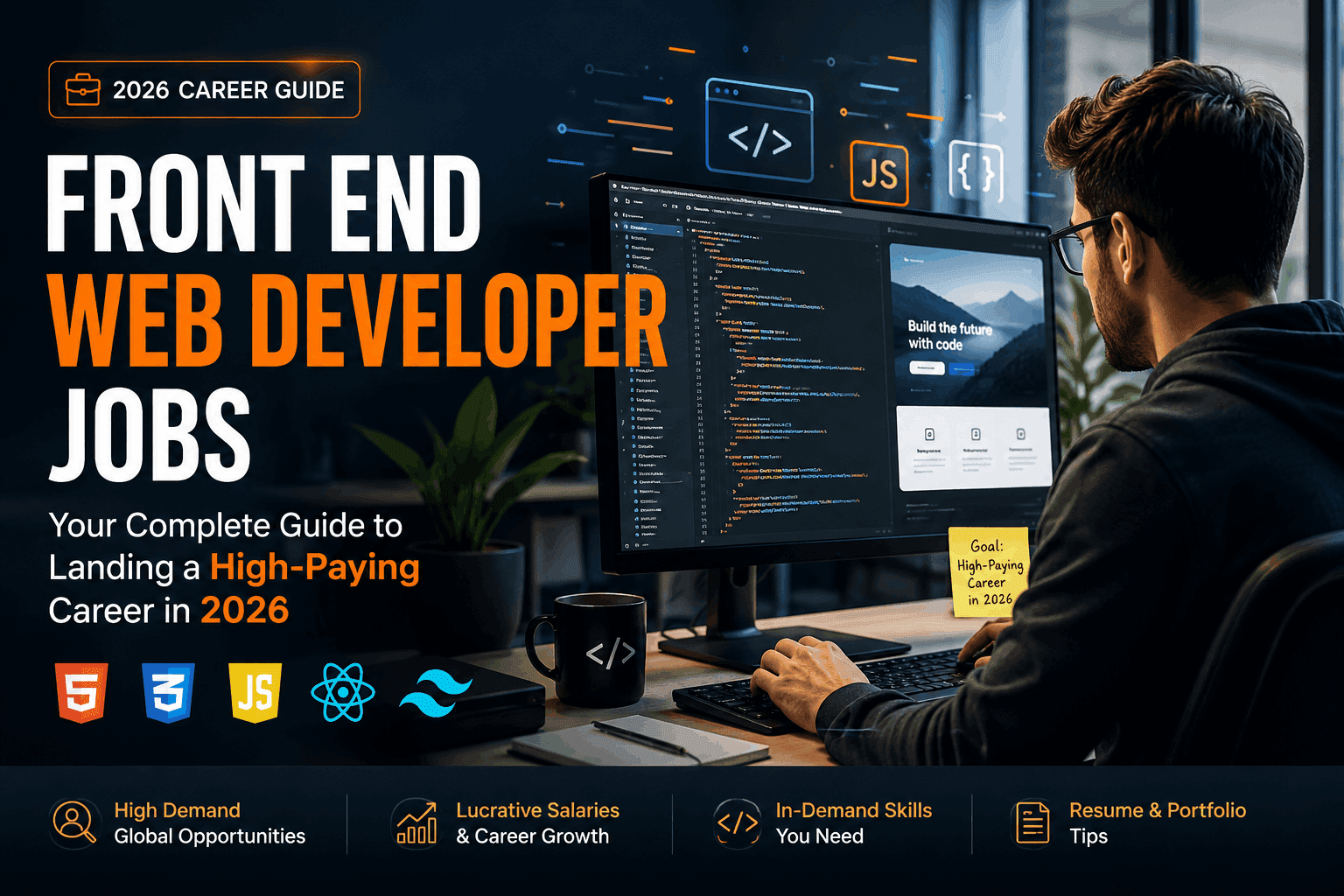 July 22, 20267 min read
Front End Web Developer Jobs: Your Complete Guide to Landing a High-Paying Career in 2026
D
Digital Expert IT
Author
The demand for front end web developer jobs continues to grow in 2026 as businesses invest more in fast, responsive, and user-friendly websites. Whether you're a fresh graduate, a self-taught developer, or someone planning a career switch, front-end development offers excellent opportunities, competitive salaries, and long-term career growth.
Today's companies are looking for developers who can create engaging digital experiences that work seamlessly across desktops, tablets, and smartphones. From startups to global enterprises, nearly every organization needs skilled front-end developers to build modern websites and web applications.
If you're wondering how to start your journey, what skills employers expect, and where to find the best opportunities, this guide covers everything you need to know.
What Are Front End Web Developer Jobs?
A front-end web developer is responsible for building the visual part of a website or web application—the section users interact with directly.
Their responsibilities typically include:
- Creating responsive website layouts
- Developing interactive user interfaces
- Optimizing website performance
- Ensuring mobile compatibility
- Improving website accessibility
- Collaborating with UI/UX designers
- Working with backend developers to integrate APIs
- Fixing browser compatibility issues
Simply put, front-end developers transform design concepts into fully functional websites that provide an excellent user experience.
Why Front End Development Is Growing Rapidly
The digital economy continues expanding every year. Businesses require websites that are fast, attractive, secure, and optimized for conversions.
Several factors are driving demand for front-end developers:
- More businesses moving online
- Growth of eCommerce
- Mobile-first web development
- AI-powered web applications
- Increasing focus on user experience (UX)
- Progressive Web Apps (PWAs)
- SaaS platforms and dashboards
These trends make front end web developer jobs one of the most stable and rewarding careers in technology.
Essential Skills Employers Look For
If you're applying for front-end positions, employers usually expect proficiency in the following technologies.
HTML5
The foundation of every webpage. Strong semantic HTML improves accessibility and SEO.
CSS3
Used for styling websites with responsive layouts, animations, Flexbox, Grid, and modern design systems.
JavaScript
JavaScript brings websites to life through dynamic interactions and functionality.
React
React remains one of the most requested front-end frameworks because it enables developers to build scalable and reusable user interfaces.
Version Control (Git)
Companies expect developers to collaborate using Git and GitHub.
Responsive Design
Knowing how to build websites that work flawlessly on every device is essential.
Performance Optimization
Fast-loading websites improve user satisfaction and search engine rankings.
Basic SEO Knowledge
Front-end developers who understand technical SEO have a significant advantage during hiring.
Popular Front End Developer Frameworks
Learning one or more frameworks can increase your employability.
Some of the most in-demand options include:
- React
- Next.js
- Vue.js
- Angular
- Tailwind CSS
- Bootstrap
Keeping your skills updated with modern frameworks makes you more competitive in today's job market.
Types of Front End Web Developer Jobs
Front-end development offers several career paths.
Junior Front End Developer
Ideal for beginners with basic HTML, CSS, JavaScript, and Git knowledge.
React Developer
Specializes in building dynamic applications using React.
Next.js Developer
Works on SEO-friendly, high-performance React applications.
UI Developer
Focuses on pixel-perfect implementation of design systems.
Front End Engineer
Handles complex architectures, application performance, and large-scale web products.
Freelance Front End Developer
Works independently with clients across different industries.
Remote opportunities are especially popular, allowing developers to work with companies worldwide.
How to Get Your First Front End Web Developer Job
Landing your first role requires more than learning programming languages.
Build Real Projects
Employers prefer practical experience over certificates. Create:
- Portfolio websites
- Business websites
- Landing pages
- ECommerce interfaces
- Admin dashboards
Create an Online Portfolio
Showcase your best projects with GitHub links, live demos, and detailed descriptions.
Learn Modern Development Practices
Understand:
- API integration
- Authentication
- Responsive development
- Deployment
- Performance optimization
Practice Technical Interviews
Prepare for questions involving JavaScript, CSS, React, and problem-solving.
Contribute to Open Source
Open-source contributions demonstrate teamwork and practical coding experience.
Common Interview Questions
Recruiters often ask questions such as:
- Explain the CSS Box Model.
- What is the Virtual DOM?
- Difference between Flexbox and Grid?
- What are React Hooks?
- Explain event delegation.
- How do you optimize website performance?
- What is lazy loading?
- How does responsive design work?
Practicing these topics can significantly improve your interview performance.
Salary Expectations in 2026
Although salaries vary by country and experience, front-end developers remain among the highest-paid professionals in web development.
Typical factors influencing salary include:
- Technical skills
- Portfolio quality
- Years of experience
- Location
- Framework expertise
- Communication skills
Remote positions often provide access to international salaries, making this field even more attractive.
Career Growth Opportunities
Front-end development offers multiple advancement paths.
You can eventually become:
- Senior Front End Developer
- Full Stack Developer
- Software Engineer
- Technical Lead
- UI Architect
- Product Engineer
- Engineering Manager
Continuous learning is the key to long-term success.
Tips to Stand Out from Other Candidates
Competition is increasing, but these strategies can help you stand out:
- Build projects consistently.
- Maintain an active GitHub profile.
- Optimize your LinkedIn profile.
- Write technical blogs.
- Learn TypeScript.
- Master React and Next.js.
- Improve problem-solving skills.
- Practice clean code principles.
- Understand basic backend concepts.
- Stay updated with industry trends.
Employers value developers who demonstrate continuous learning and practical experience.
Why Businesses Need Professional Front End Developers
A well-developed website is more than just an online presence—it directly impacts user engagement, lead generation, and conversions. Businesses that invest in professional front-end development often see better performance, improved customer trust, and stronger search visibility.
If you're interested in exploring professional web development solutions, Digital Expert IT offers modern website development, optimization, and digital services designed to help businesses grow. Learn more about their services here: Digital Expert It
You can also explore additional insights and digital solutions by visiting the official Digital Expert IT website.
Conclusion
The future of front end web developer jobs looks brighter than ever. Businesses continue investing in modern websites, creating strong demand for skilled developers who understand responsive design, JavaScript, React, performance optimization, and user experience.
Whether you're a student, a recent graduate, a self-taught programmer, or someone changing careers, there has never been a better time to enter front-end development. Focus on building real-world projects, continuously improving your skills, and creating a portfolio that showcases your abilities. With dedication and consistent practice, you can build a rewarding career in one of the fastest-growing areas of technology.
Frequently Asked Questions (FAQs)
1. Are front end web developer jobs in demand in 2026?
Yes. Demand remains strong as businesses continue investing in websites, web applications, eCommerce platforms, and digital experiences.
2. What qualifications do I need to become a front-end developer?
A computer science degree can help, but many employers also hire candidates with strong portfolios, practical experience, and relevant technical skills.
3. Which programming languages should I learn first?
Start with HTML, CSS, and JavaScript. After mastering these, learn React, Next.js, Git, and TypeScript.
4. Can I become a front-end developer without a degree?
Absolutely. Many successful front-end developers are self-taught and have built impressive portfolios that demonstrate their skills.
5. Is React necessary for front end web developer jobs?
While not mandatory, React is one of the most widely used libraries and is frequently listed as a required skill in job postings.
6. How long does it take to become job-ready?
With consistent learning and project-based practice, many beginners become ready for entry-level roles within 6–12 months.
7. What should I include in my front-end developer portfolio?
Include responsive websites, React applications, landing pages, dashboards, GitHub repositories, and live project links to showcase your abilities.
8. Can front-end developers work remotely?
Yes. Remote work opportunities are widely available, allowing developers to work with companies and clients from around the world.
9. Is front-end development a good long-term career?
Yes. As technology evolves, skilled front-end developers continue to be in high demand across industries, making it a stable and rewarding career choice.
10. What is the difference between a front-end developer and a full-stack developer?
A front-end developer focuses on the user interface and client-side functionality, while a full-stack developer works on both the front end and the server-side backend.