49/08, Nirala Residential Area, Khulna
contact@digitalexpertit.com
←Back to Articles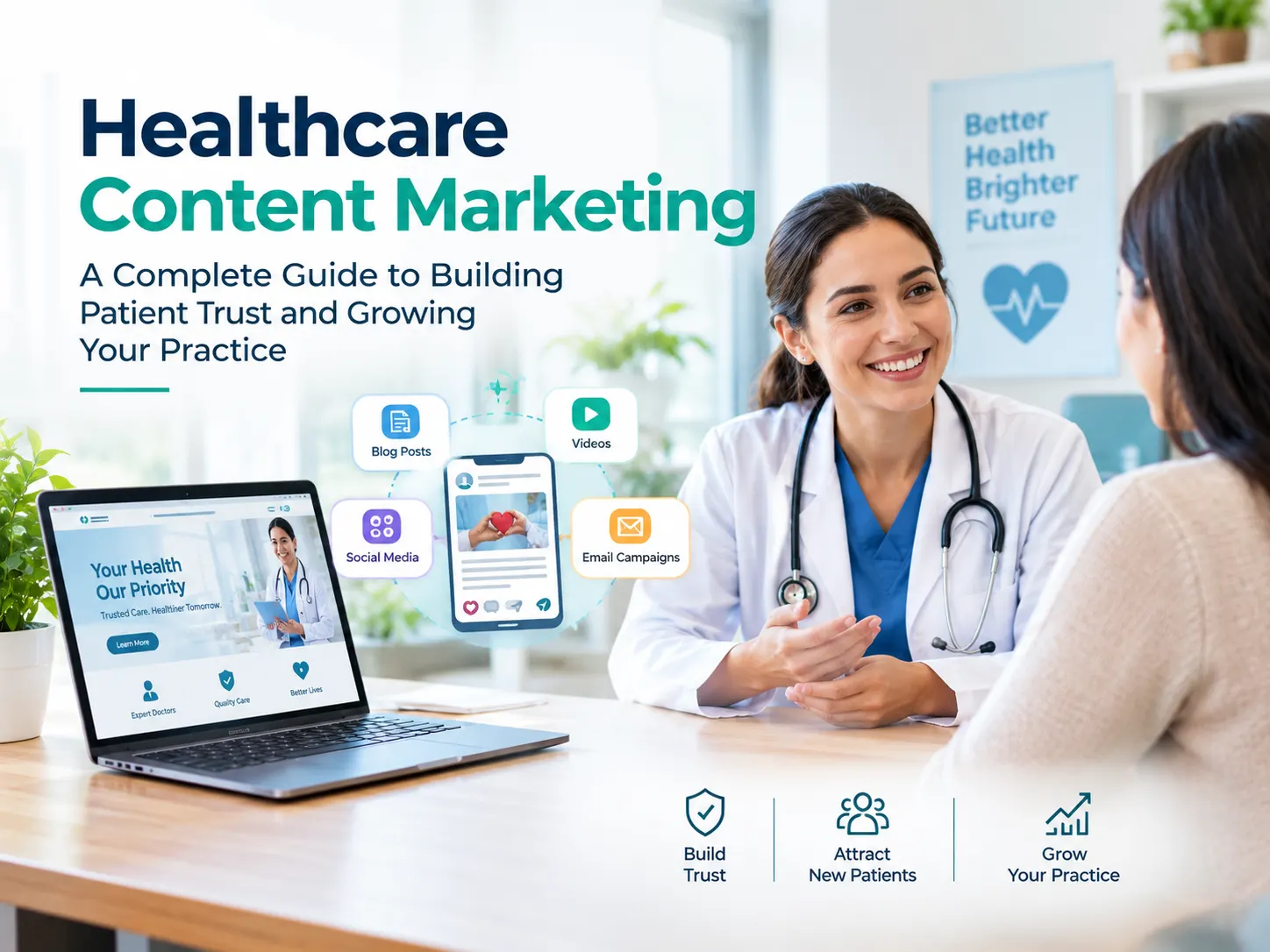 October 24, 20269 min read
Healthcare Content Marketing: A Complete Guide to Building Patient Trust and Growing Your Practice
D
Digital Expert IT
Author
Healthcare has changed. Before booking an appointment, many patients search online for symptoms, treatment options, doctor reviews, and nearby clinics. They want reliable information, clear answers, and confidence that they are choosing the right healthcare provider.
This is where healthcare content marketing becomes valuable.
Rather than relying only on traditional advertising, healthcare organizations can use educational blog posts, service pages, videos, social media, and email newsletters to connect with patients. The goal is not simply to promote medical services. It is to answer real questions, build trust, and help people make informed decisions.
For hospitals, clinics, private practices, and healthcare brands, a well-planned content strategy can strengthen online visibility and support long-term business growth.
What Is Healthcare Content Marketing?
Healthcare content marketing is the process of creating and sharing useful, relevant, and medically accurate information to attract, educate, and engage patients or healthcare customers.
It can include articles about common health concerns, explanations of medical procedures, physician profiles, patient education videos, frequently asked questions, and updates about available services.
For example, a dental clinic might publish an article explaining how to prepare for a root canal. A physiotherapy practice could create videos demonstrating general mobility exercises, while a hospital might publish a guide explaining what patients can expect during a routine health screening.
Each piece of content serves a purpose: helping people understand their options before they decide what to do next.
Why Is Healthcare Content Marketing Important?
Patients need more than an advertisement when making healthcare decisions. They need information they can understand and trust.
A strong healthcare content marketing strategy offers several benefits.
1. Builds patient trust: Clear, evidence-based information demonstrates that a healthcare organization takes patient education seriously. Naming qualified authors and medical reviewers adds accountability.
2. Improves search visibility: Search engine optimization (SEO) helps relevant pages appear when people look for healthcare services or answers to common questions.
3. Supports patient acquisition: Informative content can introduce your services to people who are researching providers and guide them toward booking an appointment.
4. Strengthens patient engagement: Newsletters, educational videos, and social media updates help healthcare organizations maintain communication with their audiences.
5. Supports long-term growth: Unlike a short advertising campaign, a useful article can continue attracting relevant visitors long after publication, provided it remains accurate and competitive.
7 Healthcare Content Marketing Strategies That Work
1. Create Helpful, SEO-Optimized Blog Content
Blogging is one of the most practical ways to answer patient questions and improve organic search visibility.
Start by identifying what your audience wants to know. Patients might search for questions such as “What should I expect during my first physiotherapy appointment?” or “How often should I schedule a dental checkup?”
Create dedicated articles that answer these questions in straightforward language.
Use your primary keyword naturally in the title, introduction, relevant headings, and meta description. Include related search terms where they genuinely fit, and link articles to relevant service pages.
Avoid publishing repetitive articles simply to target more keywords. Accuracy, usefulness, and clear explanations matter more than word count alone.
2. Optimize Your Healthcare Website for Search Engines
Publishing good content is only one part of the process. Your website also needs to make it easy for visitors and search engines to find important information.
Create dedicated pages for each major service, specialty, and location where relevant. Include accurate contact details, provider qualifications, appointment information, and clear calls to action.
Technical SEO matters, too. Make sure your website loads quickly, works well on mobile devices, uses descriptive page titles, and allows search engines to index important pages.
For local practices, maintaining an accurate Google Business Profile can also help nearby patients discover your services.
Healthcare organizations seeking professional support with website performance, search visibility, and online growth can explore Digital Expert IT.
3. Use Social Media for Patient Education
Social media gives healthcare providers another way to share useful information and engage with their communities.
Instead of making every post promotional, create content that answers everyday questions. You might share preventive-care reminders, explain common medical terminology, introduce qualified providers, or publish short educational videos.
Different platforms serve different audiences. Facebook may help a local clinic share community updates, while LinkedIn can be useful for healthcare organizations connecting with professionals and industry partners.
Keep medical information accurate, avoid sensational claims, and never reveal identifiable patient information without the appropriate authorization.
4. Invest in Video Marketing
Some healthcare topics are easier to understand when someone explains them visually.
Short videos can introduce a medical specialist, demonstrate how to prepare for an appointment, explain a general procedure, or answer frequently asked questions.
Videos do not need expensive production to be effective. Clear audio, accessible captions, good lighting, and a focused message can make a meaningful difference.
Have qualified healthcare professionals review medical explanations before publication. Include appropriate disclaimers when necessary, and avoid presenting general educational content as a substitute for individualized medical advice.
5. Develop Educational Email Marketing Campaigns
Email marketing helps healthcare organizations maintain useful communication with subscribers who have chosen to receive updates.
A clinic might send a monthly newsletter featuring seasonal health education, new service announcements, appointment preparation tips, or links to recently published articles.
Keep messages relevant and easy to read. Use clear subject lines, include an appropriate unsubscribe option, and obtain consent where required.
Healthcare marketers must also pay close attention to privacy rules. Patient information should never be used in marketing campaigns without the appropriate legal basis and safeguards.
6. Build Trust Through Credible Medical Content
Trust is particularly important in healthcare because inaccurate information can influence decisions about people's health.
Every medical article should be based on reliable evidence and reviewed by an appropriately qualified professional when the subject requires clinical expertise.
Include author credentials, reviewer details where applicable, publication dates, and meaningful review dates. Cite reputable medical sources to support important claims.
Avoid guaranteeing treatment outcomes or suggesting that one treatment is suitable for everyone. Honest explanations of benefits, limitations, risks, and when to seek professional care help readers make better-informed decisions.
7. Measure Performance and Improve Your Strategy
A successful healthcare content marketing plan should be guided by measurable results.
Track organic traffic, search impressions, keyword performance, engagement, appointment inquiries, and conversions. Google Search Console can help identify the queries bringing visitors to your website, while analytics tools can show how people interact with your content.
Look beyond page views. An article attracting fewer visitors may still be valuable if it reaches the right audience and generates qualified inquiries.
Review performance regularly, update outdated information, and improve pages that receive impressions but few clicks. Use the findings to decide which topics deserve more attention.
Common Healthcare Content Marketing Mistakes to Avoid
Even well-intentioned content strategies can fall short when important details are overlooked.
Common mistakes include publishing medically inaccurate information, using excessive technical jargon, targeting irrelevant keywords, neglecting local SEO, and focusing on promotion instead of patient needs.
Privacy is another critical consideration. Patient stories, testimonials, photographs, and clinical details must be handled in accordance with applicable privacy laws and consent requirements. In the United States, HIPAA may apply to covered entities and their business associates.
Healthcare organizations should also avoid relying entirely on AI-generated medical content without qualified human review. AI tools can assist with planning and drafting, but they cannot replace clinical accountability.
A professional digital marketing strategy and service plan can help healthcare businesses coordinate content, SEO, website improvements, and audience engagement around clear objectives.
Conclusion
Healthcare content marketing is about more than attracting website visitors. It helps healthcare organizations communicate clearly, establish credibility, educate patients, and make their services easier to discover online.
The best approach combines useful blog articles, SEO-friendly service pages, educational videos, social media, email marketing, and regular performance analysis.
Most importantly, every piece of healthcare content should prioritize accuracy, privacy, and the needs of its intended audience.
Start with the questions your patients ask most often. Create trustworthy answers, have medical content reviewed by qualified professionals, and improve your strategy based on real results. With consistency and care, healthcare content marketing can become a valuable part of your organization's long-term digital growth.
Frequently Asked Questions About Healthcare Content Marketing
1. What is healthcare content marketing?
Healthcare content marketing involves creating and distributing educational, relevant, and medically accurate content to inform patients, build trust, improve online visibility, and support healthcare organizations' growth.
2. Why is content marketing important for healthcare providers?
It helps providers answer patient questions, establish credibility, improve search visibility, explain their services, and encourage suitable patients to take the next step toward an appointment.
3. What are the best healthcare content marketing strategies?
Effective strategies include SEO-focused blogging, optimized service pages, educational videos, social media marketing, email newsletters, local SEO, and regularly reviewing content performance.
4. How does healthcare content marketing improve SEO?
It helps a healthcare website address relevant search queries, build topical coverage, connect related pages through internal links, and demonstrate expertise through accurate, trustworthy information. Rankings are not guaranteed and depend on many factors.
5. What types of content work best for healthcare marketing?
Common formats include patient education articles, treatment and procedure guides, provider profiles, frequently asked questions, short videos, infographics, newsletters, and service-specific landing pages.
6. How can healthcare organizations ensure their content is trustworthy?
Use reputable medical sources, have clinical content reviewed by qualified professionals, display accurate author credentials, update outdated information, and avoid unsupported claims or guaranteed outcomes.
7. Is healthcare content marketing subject to privacy regulations?
Yes. Depending on the country, organization, and activity, healthcare marketing may be subject to privacy, consent, advertising, and professional regulations. Healthcare organizations should follow applicable requirements and obtain appropriate legal guidance.
8. How long does healthcare content marketing take to show results?
The timeline varies according to competition, website authority, content quality, technical SEO, and publishing consistency. Some content may attract engagement quickly, while meaningful organic search growth can take several months or longer.
9. Can small clinics benefit from healthcare content marketing?
Yes. Small clinics can start with a limited budget by answering common patient questions, optimizing service and location pages, maintaining accurate business listings, and publishing useful content consistently.
10. How can I measure healthcare content marketing success?
Monitor organic traffic, search impressions, rankings, engagement, appointment inquiries, and conversions. Connect these metrics to business goals to understand which content attracts relevant visitors and contributes to patient acquisition.