49/08, Nirala Residential Area, Khulna
contact@digitalexpertit.com
←Back to Articles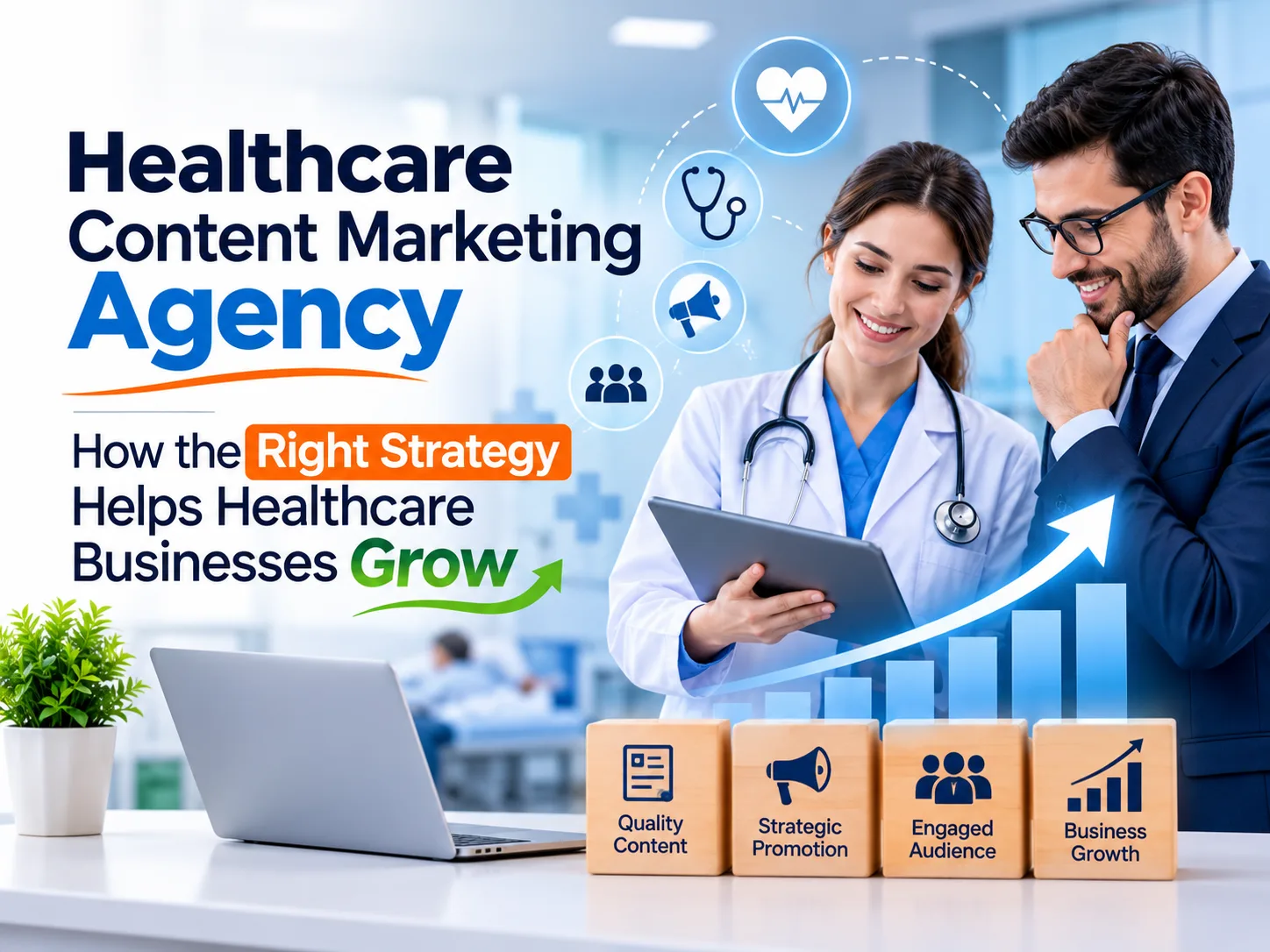 November 23, 20269 min read
Healthcare Content Marketing Agency: How the Right Strategy Helps Healthcare Businesses Grow
D
Digital Expert IT
Author
Healthcare businesses need more than a professional-looking website to attract new patients. People want reliable information, clear answers, and confidence that they are choosing the right healthcare provider. Before booking an appointment, many potential patients research clinics, compare services, read reviews, and explore healthcare websites.
This is where a healthcare content marketing agency can make a real difference.
By combining valuable content, search engine optimization (SEO), social media marketing, and a consistent brand message, healthcare businesses can reach the right audience and build lasting trust. Instead of simply promoting services, an effective content strategy helps educate people and guides them toward making informed decisions.
Let's explore how healthcare content marketing works and why choosing the right marketing partner matters.
What Is a Healthcare Content Marketing Agency?
A healthcare content marketing agency helps medical practices, hospitals, clinics, dental offices, healthcare professionals, and other health-related businesses develop and distribute meaningful online content.
Unlike traditional advertising, which often focuses directly on selling a service, healthcare content marketing prioritizes education, communication, and trust.
A specialized strategy may include:
- Healthcare blog writing and educational articles
- Medical website content and service descriptions
- Search engine optimization (SEO)
- Social media content creation and management
- Educational videos and short-form content
- Email marketing campaigns
- Healthcare brand development
- Content planning and performance tracking
For example, a dental clinic might publish an article explaining dental implant procedures, create an educational Instagram carousel about oral hygiene, and develop a service page targeting local searches.
Each piece serves a different purpose, but together they create a stronger online presence.
Why Is Content Marketing Important for Healthcare Businesses?
Healthcare decisions are personal. Patients want to understand their options before trusting a provider with their health.
A well-planned content strategy helps healthcare businesses answer common questions and establish credibility before the first appointment.
Here are some important benefits.
1. Builds Patient Trust and Credibility
Trust is one of the biggest factors influencing healthcare decisions. People are more likely to consider a clinic when its website provides useful, understandable, and reliable information.
Publishing educational articles, introducing healthcare professionals, explaining available treatments, and answering frequently asked questions helps establish credibility.
However, medical content must be accurate and reviewed by appropriately qualified professionals. Healthcare businesses should never sacrifice accuracy for marketing language.
2. Improves Search Engine Visibility
Imagine someone searching for "best dental clinic near me" or "how to choose a skin specialist."
If your website contains relevant, helpful content targeting these searches, it has an opportunity to reach potential patients through Google.
Healthcare SEO involves more than adding keywords to blog posts. It includes keyword research, technical website optimization, local SEO, internal linking, and creating useful service pages.
Consistently publishing relevant content can help healthcare businesses build topical authority and improve their organic search visibility over time.
3. Educates Patients Before Appointments
Patients often have questions about treatments, procedures, costs, preparation, and recovery.
Instead of making every patient search for answers across multiple websites, healthcare providers can publish helpful resources directly on their own platforms.
For example, a physiotherapy clinic could create content explaining common causes of back pain, treatment options, and what patients can expect during their first appointment.
This makes the patient journey more informative and helps people feel better prepared.
4. Creates Stronger Brand Awareness
A healthcare business should have a recognizable and consistent online identity.
Regular blog publishing, social media updates, educational videos, and professional website content help people become familiar with your brand.
Over time, your business can become a recognizable source of information within its healthcare niche.
Essential Services Offered by a Healthcare Content Marketing Agency
Not every healthcare business needs the same marketing approach. A hospital, private clinic, dental practice, and healthcare technology company may have completely different audiences.
However, several services can support an effective healthcare marketing strategy.
Healthcare SEO and Blog Content
SEO-focused healthcare articles help answer the questions people search for online. Topics may include treatment explanations, preventive care, common symptoms, healthcare services, and patient preparation guides.
A strong healthcare SEO strategy also includes optimized titles, relevant keywords, readable headings, descriptive URLs, and useful internal links.
Social Media Marketing
Platforms such as Facebook, Instagram, LinkedIn, and YouTube provide opportunities to share educational information and connect with different audiences.
Healthcare social media content might include doctor introductions, general wellness tips, clinic updates, service explanations, and informative videos.
The objective should be to provide value rather than overwhelm followers with promotional posts.
Video Marketing and Content Creation
Video is an effective format for explaining information that may be difficult to communicate through text alone.
Healthcare businesses can use short educational videos, procedure explanations, facility introductions, animations, and expert-led discussions.
These formats help make complex information easier to understand while giving audiences another way to engage with the brand.
Website Content and Conversion Optimization
Your website is often where interested visitors decide whether to contact your business.
Clear service descriptions, professional provider profiles, informative landing pages, mobile-friendly design, and accessible contact information can improve the experience.
A website should not only attract visitors; it should also make the next step simple.
How to Choose the Right Healthcare Content Marketing Agency
Choosing a marketing partner requires more than comparing monthly packages or looking at social media followers.
Here are five things worth considering.
1. Understand their content strategy: Ask how they research healthcare keywords, identify audience needs, and plan content around patient questions.
2. Check their SEO knowledge: Look for experience with technical SEO, on-page optimization, local search, and content structure.
3. Prioritize accuracy and compliance: Ask how medical content is reviewed and how patient privacy, testimonials, and healthcare advertising requirements are handled in your target market.
4. Review their creative capabilities: A good content strategy may require writers, designers, video editors, and social media specialists working together.
5. Ask how they measure results: Organic traffic, keyword visibility, qualified inquiries, appointment requests, and engagement provide more meaningful insights than impressions alone.
The right agency should understand that healthcare marketing requires a balance between business growth, responsible communication, and patient trust.
How Digital Expert IT Supports Business Growth Through Digital Marketing
Building a strong digital presence requires more than publishing occasional blog posts. Businesses need a connected strategy that brings together content, website performance, search visibility, and audience engagement.
At Digital Expert IT, we focus on helping businesses strengthen their online presence through digital marketing, video editing, SEO, and custom website development.
Our approach brings together creative content and technical expertise to help businesses reach their audiences and build a more effective digital foundation.
From social media campaigns and engaging video content to SEO optimization and conversion-focused website development, our digital marketing and web solutions are designed to support measurable business growth.
For healthcare businesses, the right strategy should always begin with understanding the target audience, the services being promoted, and the trust required to turn an interested visitor into a potential patient.
Final Thoughts
Finding the right healthcare content marketing agency can help medical practices and healthcare businesses build visibility, communicate their expertise, and develop stronger relationships with their audiences.
The most effective strategy isn't about publishing as much content as possible. It's about creating accurate, useful, and relevant information that answers real questions and supports people throughout their decision-making journey.
When SEO, educational content, social media, video marketing, and website optimization work together, healthcare businesses have a stronger foundation for sustainable digital growth.
Ultimately, successful healthcare marketing starts with a simple principle: educate your audience, earn their trust, and make it easier for them to find the care they need.
Frequently Asked Questions (FAQs)
1. What does a healthcare content marketing agency do?
A healthcare content marketing agency creates and manages digital content for healthcare businesses. Its services may include medical blog writing, healthcare SEO, website content, social media management, video marketing, and digital advertising to improve online visibility and audience engagement.
2. Why do healthcare businesses need content marketing?
Healthcare businesses need content marketing to educate potential patients, build credibility, improve search visibility, and communicate their services. Helpful content also allows patients to research providers and understand available healthcare options before making an appointment.
3. How does healthcare content marketing improve SEO?
Healthcare content marketing improves SEO by targeting relevant search queries, publishing useful articles, optimizing service pages, building internal links, and strengthening website authority. Accurate, professionally reviewed content can also support trust and search visibility.
4. What type of content works best for healthcare marketing?
Educational blog posts, treatment guides, frequently asked questions, provider profiles, patient education videos, infographics, and social media posts are effective content formats. The best choices depend on the healthcare specialty and the audience's information needs.
5. How much does a healthcare content marketing agency cost?
The cost depends on the services required, content volume, SEO competition, campaign complexity, and marketing goals. Some agencies offer monthly packages, while others provide customized solutions based on individual business requirements.
6. How long does healthcare content marketing take to show results?
Results vary depending on website authority, competition, content quality, and marketing consistency. SEO may take several months to produce meaningful organic growth, while social media campaigns and paid advertising can generate engagement or inquiries sooner.
7. Is healthcare content marketing different from general content marketing?
Yes. Healthcare content marketing requires additional attention to medical accuracy, professional expertise, patient privacy, and industry-specific advertising requirements. Content should be informative, responsible, and reviewed by qualified healthcare professionals when it involves clinical information.
8. How can I choose the best healthcare content marketing agency?
Look for an agency with a clear SEO strategy, strong content creation capabilities, transparent reporting, and an understanding of healthcare communication requirements. Review its previous work, ask about content review processes, and make sure its approach aligns with your business goals.