49/08, Nirala Residential Area, Khulna
contact@digitalexpertit.com
←Back to Articles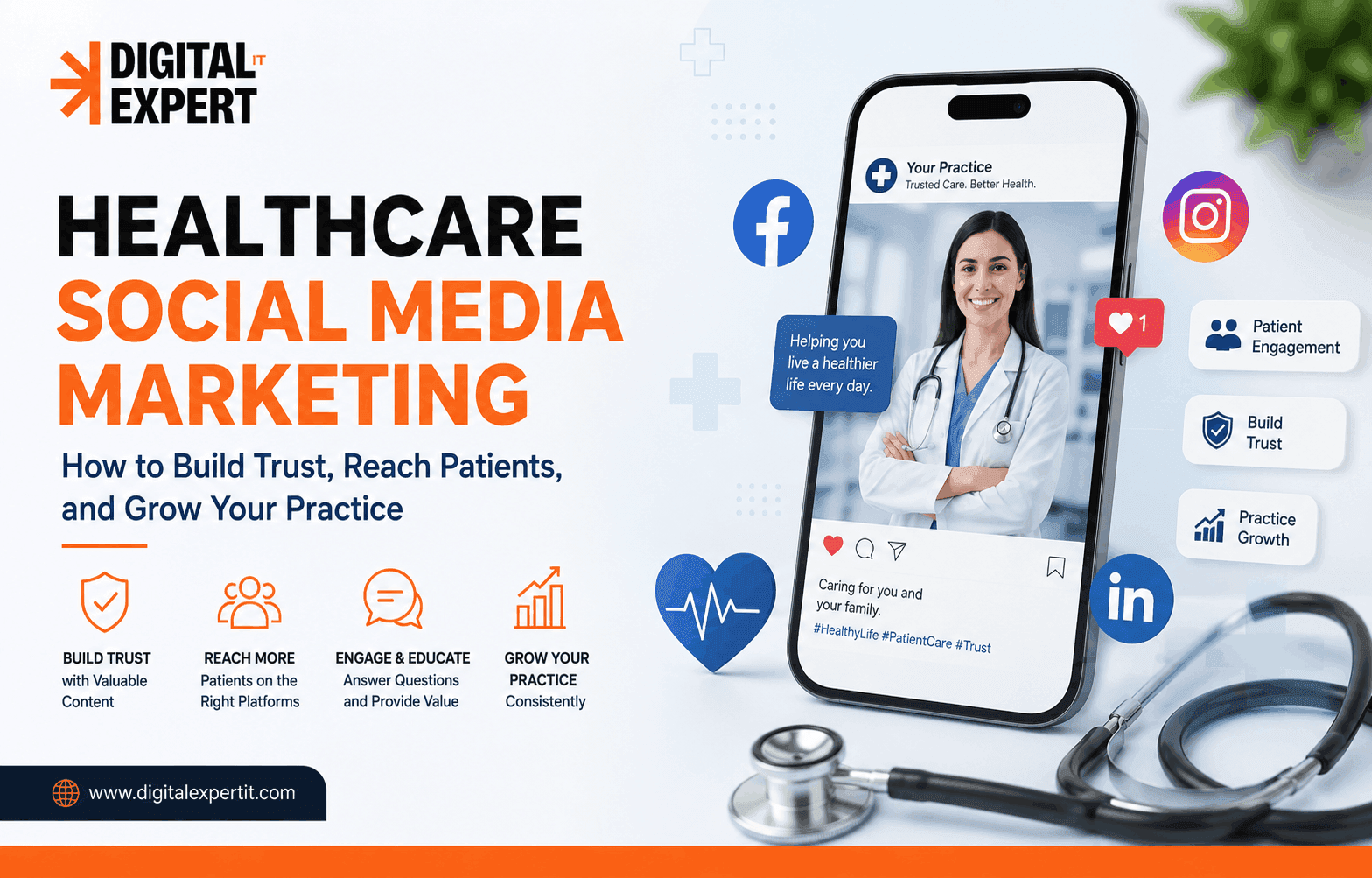 September 1, 20268 min read
Healthcare Social Media Marketing: How to Build Trust, Reach Patients, and Grow Your Practice
D
Digital Expert IT
Author
Healthcare has changed dramatically in the digital age. Before choosing a doctor, clinic, hospital, dentist, therapist, or healthcare provider, many people now search online, read reviews, watch videos, and check social media.
That is why healthcare social media marketing has become more than simply posting photos or sharing medical tips. It is a powerful way for healthcare businesses to educate their audience, build trust, improve visibility, and turn online attention into real patient relationships.
But healthcare marketing is different from marketing a restaurant, clothing brand, or ordinary service business. Patients want reliable information, empathy, credibility, and transparency. A successful strategy must combine good content with responsible communication and a clear understanding of patient privacy.
What Is Healthcare Social Media Marketing?
Healthcare social media marketing is the use of platforms such as Facebook, Instagram, YouTube, LinkedIn, and other social channels to promote healthcare services, educate audiences, communicate with patients, and build a trusted healthcare brand.
For example, a healthcare provider might use social media to:
- Explain common health conditions
- Answer frequently asked questions
- Introduce doctors and medical professionals
- Share general wellness advice
- Explain available services
- Publish patient education content
- Share clinic updates and announcements
- Create short educational videos
- Respond to general audience questions
- Build awareness around important health topics
The goal should not be to sell something in every post. Healthcare marketing works best when the audience feels that the brand is genuinely helping them.
Why Is Social Media Important for Healthcare Businesses?
Patients are increasingly comfortable using digital platforms to research healthcare information and providers. This creates a major opportunity for clinics and healthcare organizations that can provide useful, trustworthy content consistently.
A strong social media presence can help healthcare businesses achieve several important goals.
1. Build Patient Trust
Trust is one of the most valuable assets in healthcare.
People want to know who is treating them, what a procedure involves, and whether a healthcare provider understands their concerns. Educational posts, doctor introductions, behind-the-scenes content, and simple explanations can make a healthcare brand feel more approachable.
Instead of constantly saying, “Choose us,” show your expertise through useful information.
2. Educate Your Audience
Healthcare social media content should answer real questions.
For example:
- “What are the early signs of dehydration?”
- “When should you see a dermatologist?”
- “How often should you schedule a dental checkup?”
- “What should you know before a physical therapy session?”
This type of content can attract people who are actively searching for answers while positioning your healthcare organization as a knowledgeable resource.
3. Increase Brand Visibility
Even when someone is not ready to book an appointment today, consistent content keeps your practice visible.
A person may see your educational Reel this week, follow your account next month, and eventually contact your clinic when they need a relevant service.
That is why healthcare social media strategy should focus on long-term relationships rather than expecting every post to generate immediate appointments.
4. Generate Quality Leads
Social media can also support patient acquisition.
Clear calls to action can guide interested users toward your website, contact form, consultation request, appointment page, or phone number.
However, the journey should feel natural. A helpful educational post followed by a relevant call to action is generally more effective than aggressive promotional messaging.
Best Healthcare Social Media Marketing Strategies
A successful healthcare social media strategy needs consistency, creativity, and careful planning.
Create Educational Short-Form Videos
Short-form video is one of the most useful formats for healthcare brands.
Doctors and healthcare professionals can answer common questions in 30–60 seconds, explain procedures, discuss general wellness topics, or correct common misconceptions.
For example:
“3 Things You Should Know Before Your First Physiotherapy Session.”
This format is easy to understand, highly shareable, and gives potential patients a chance to become familiar with the professionals behind the brand.
Use Different Content Pillars
Posting random content makes social media difficult to manage. Instead, create several content pillars.
A healthcare practice might use:
Educational Content: Health tips, FAQs, explanations, and awareness posts.
Professional Content: Doctor introductions, staff features, qualifications, and expertise.
Service Content: Information about treatments, procedures, and available services.
Engagement Content: Questions, polls, quizzes, and community-focused posts.
Brand Content: Clinic culture, behind-the-scenes moments, events, and milestones.
This creates a balanced feed without making every post feel like an advertisement.
Optimize Content for Each Platform
Not every social platform should be treated exactly the same way.
Instagram is excellent for Reels, carousels, visual education, and brand storytelling. Facebook can work well for community engagement, educational posts, videos, and local audiences. YouTube is valuable for longer educational videos and searchable health topics. LinkedIn can be useful for healthcare organizations that want to build professional authority and attract employees, partners, or industry audiences.
The best platform mix depends on where your target audience actually spends time.
Patient Privacy and Healthcare Marketing
Healthcare organizations need to be especially careful with patient information.
For organizations subject to HIPAA, the U.S. Department of Health and Human Services explains that protected health information generally cannot be used or disclosed for marketing without the required authorization, subject to specific exceptions.
That means healthcare marketers should never casually publish patient photos, testimonials, medical details, treatment results, or identifiable information without following the appropriate consent and privacy procedures.
A good healthcare social media marketing plan should therefore include:
- Clear approval processes
- Patient consent procedures
- Privacy-focused workflows
- Careful review of captions and visuals
- Professional responses to comments and messages
- Avoidance of personal medical advice in public comments
Healthcare content should also avoid exaggerated promises or misleading claims. Trust can take years to build and only seconds to damage.
How to Measure Healthcare Social Media Marketing Results
Followers are useful, but they should not be the only measurement.
Track metrics that connect social media activity to actual business goals, including:
- Engagement rate
- Video views and watch time
- Website traffic
- Profile visits
- Content saves and shares
- Qualified inquiries
- Appointment requests
- Cost per lead
- Conversion rate
- Return on advertising spend
For example, a post with 2,000 views may be less valuable than a post with 500 views that generates several qualified inquiries.
The right question is not simply, “How many people saw this?”
It is, “Did this content move the right people closer to choosing our healthcare service?”
How a Healthcare Social Media Agency Can Help
Managing healthcare social media consistently requires more than creating a few posts each month. It involves strategy, content planning, graphic design, video editing, community management, analytics, and ongoing optimization.
A professional digital marketing service can help healthcare organizations create a structured strategy around their goals, audience, services, and content opportunities.
At Digital Expert IT, healthcare businesses can build a digital marketing approach that combines social media, content creation, advertising, video marketing, website optimization, and conversion-focused strategies.
The objective is simple: create digital experiences that help healthcare brands become more visible, credible, and accessible to the people they want to reach.
Final Thoughts
Healthcare social media marketing is not about posting every day just to stay active. It is about building a reliable digital presence that educates people, communicates expertise, strengthens trust, and supports business growth.
The strongest healthcare brands understand that patients are not just looking for advertisements. They are looking for answers, reassurance, expertise, and people they can trust.
By combining educational content, short-form video, thoughtful storytelling, platform-specific strategies, responsible patient communication, and measurable campaigns, healthcare organizations can turn social media into a valuable part of their overall marketing strategy.
The key is consistency. Start with your audience's questions, create content that genuinely helps them, protect their privacy, and measure what actually contributes to meaningful business results.
Frequently Asked Questions About Healthcare Social Media Marketing
1. What is healthcare social media marketing?
Healthcare social media marketing is the use of social media platforms to educate audiences, build trust, promote healthcare services, communicate with communities, and attract potential patients.
2. Why is social media important for healthcare businesses?
Social media helps healthcare organizations increase visibility, demonstrate expertise, educate potential patients, strengthen their brand, and create opportunities for inquiries and appointments.
3. What should healthcare providers post on social media?
Healthcare providers can share educational videos, health tips, FAQs, doctor introductions, general wellness information, service explanations, clinic updates, and community-focused content.
4. Which social media platform is best for healthcare marketing?
There is no single best platform for every healthcare business. Instagram, Facebook, YouTube, LinkedIn, and other platforms can be effective depending on the audience, service type, location, and marketing goals.
5. Is video marketing effective for healthcare?
Yes. Short educational videos can make complex healthcare topics easier to understand while helping audiences become familiar with healthcare professionals and brands.
6. How often should a healthcare business post on social media?
There is no universal number. A consistent schedule is more important than simply posting frequently. A healthcare business should choose a realistic publishing schedule that allows it to maintain quality and accuracy.
7. Is healthcare social media marketing HIPAA compliant?
It can be, but healthcare organizations must follow applicable privacy requirements and carefully manage protected health information. Organizations subject to HIPAA should have appropriate policies, consent procedures, and review processes before publishing patient-related content.
8. Can social media generate patients for a healthcare practice?
Yes. Social media can contribute to patient acquisition by increasing awareness, building trust, generating website traffic, and creating qualified inquiries. Results depend on the strategy, audience, content quality, offer, targeting, and conversion process.