49/08, Nirala Residential Area, Khulna
contact@digitalexpertit.com
←Back to Articles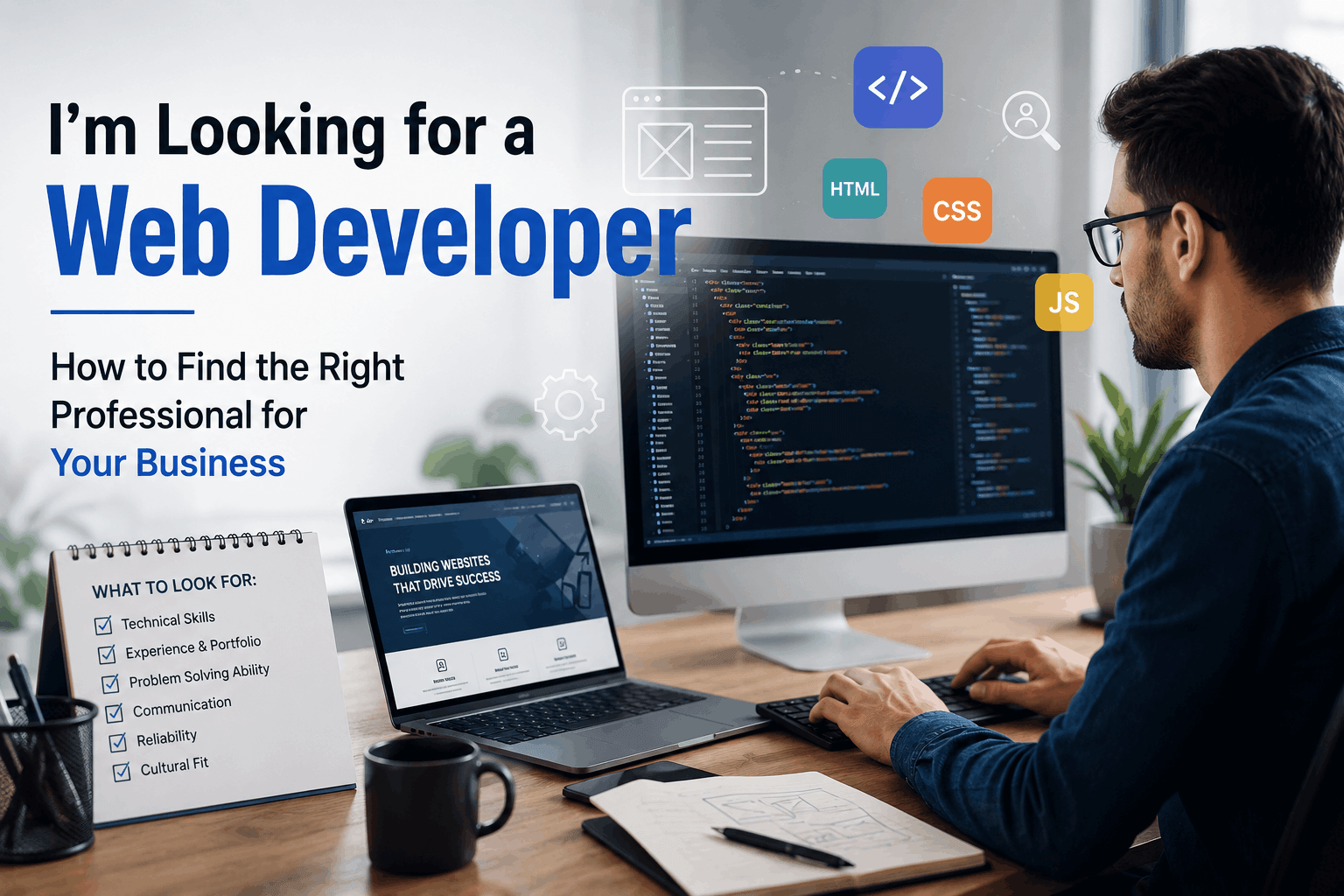 August 11, 20268 min read
I’m Looking for a Web Developer: How to Find the Right Professional for Your Business
D
Digital Expert IT
Author
I’m Looking for a Web Developer: How to Find the Right Professional for Your Business
If you're searching online for “im looking for a web developer,” you're probably not just looking for someone who can write code. You’re looking for a professional who can understand your business, build a website that looks trustworthy, and turn visitors into customers.
Today, having a website is no longer enough. Your website needs to load quickly, work properly on mobile devices, provide a smooth user experience, and support your marketing goals. Choosing the right web developer can make a major difference in how your business performs online.
Whether you run a small business, startup, eCommerce store, professional service, or growing company, this guide will help you understand what to look for when hiring a web developer.
Why Businesses Need a Professional Web Developer
A website is often the first interaction a potential customer has with your business. If the site looks outdated, loads slowly, has broken pages, or is difficult to navigate, visitors may leave before contacting you.
A professional web developer can create a website that is:
- Fast and responsive
- Mobile-friendly
- Secure and scalable
- Easy to navigate
- Optimized for search engines
- Designed around your business goals
- Ready for future updates and integrations
More importantly, a good developer doesn't simply build what you ask for. They can identify technical problems, recommend better solutions, and help create a website that supports long-term growth.
What Should You Look for When Hiring a Web Developer?
When someone says, “I’m looking for a web developer,” the next question should be: What kind of developer does my business actually need?
Not every developer specializes in the same area. Some focus on frontend design, while others work primarily with backend systems, APIs, databases, eCommerce platforms, or custom web applications.
Here are several things worth considering.
1. Relevant Experience
Look at previous projects before making a decision. A developer who has experience building websites similar to yours will usually understand your requirements faster.
For example, if you need an online store, look for someone with eCommerce experience. If you're building a custom business platform, you may need a developer experienced with databases, authentication, APIs, and backend development.
2. Modern Development Skills
Web technology changes constantly. Your developer should understand modern frameworks, responsive design, performance optimization, security, and SEO fundamentals.
Depending on the project, technologies such as Next.js, React, Node.js, modern databases, APIs, and cloud services can provide a strong foundation for a scalable website.
3. SEO-Friendly Development
A beautiful website won't help much if potential customers can't find it.
SEO should be considered during development rather than treated as an afterthought. Proper page structure, clean URLs, fast loading, mobile usability, metadata, internal linking, and crawlable content can all contribute to a stronger search presence.
Google also recommends creating useful, people-first content and making it easy for search engines to understand your website. There is no guaranteed formula for reaching Google's first page, so sustainable SEO requires quality content, technical improvements, and ongoing optimization.
4. Website Performance
Nobody likes waiting for a website to load.
Slow websites can create a poor user experience and may hurt conversions. A professional developer should pay attention to image optimization, code efficiency, caching, responsive layouts, hosting, and other performance factors.
A faster website can help visitors find what they need without unnecessary frustration.
Should You Hire a Freelancer or a Web Development Company?
This depends on your project.
A freelancer may be suitable for a smaller website, landing page, or simple development task. For a larger project, however, you may benefit from a development company that can provide design, development, SEO, content, marketing, maintenance, and technical support.
The most important thing is not simply whether you hire a freelancer or an agency. Look at the quality of their work, communication, technical expertise, process, and ability to understand your business.
How Much Does a Web Developer Cost?
There isn't one fixed price for web development.
A simple business website may require a relatively small investment, while a custom web application with advanced functionality, integrations, dashboards, user accounts, payment systems, and databases can cost considerably more.
The final cost usually depends on:
- Number of pages
- Design complexity
- Custom functionality
- Technology stack
- eCommerce requirements
- API integrations
- Database requirements
- SEO requirements
- Content creation
- Ongoing maintenance
Instead of choosing the cheapest developer, consider the value the website can generate for your business. A professionally developed website can become a long-term business asset rather than simply an online brochure.
Questions to Ask Before Hiring a Web Developer
Before starting your project, ask potential developers a few practical questions:
Can you show me similar projects you've completed?
This helps you evaluate their experience and development quality.
What technology will you use?
The answer should match your project's requirements rather than simply being based on the developer's favorite technology.
Will the website be mobile-friendly?
It should be. A large portion of website traffic comes from mobile devices.
Will the website be SEO-friendly?
Ask how they will handle page structure, metadata, performance, URLs, internal linking, and other technical SEO fundamentals.
Will I be able to update the website later?
Make sure you understand how content and future changes will be managed.
What happens after the website launches?
Clarify maintenance, bug fixes, security updates, backups, and future development before signing an agreement.
Looking for a Web Developer for Your Business?
If you're searching for “im looking for a web developer,” you may already know that finding the right person is more important than simply finding someone who can build a website.
At Digital Expert IT, businesses can get professional digital solutions designed around their goals. From modern business websites and custom web applications to eCommerce solutions and technical optimization, the focus should be on building a website that works as part of your overall business strategy.
You can also explore the available web development and digital services to understand how different solutions can support your online presence.
The right website should do more than look good. It should communicate your brand, build trust, provide a smooth experience, support SEO, and make it easier for potential customers to take action.
Final Thoughts
When you're looking for a web developer, don't make your decision based only on price or a portfolio screenshot. Look for someone who understands your business objectives and can combine design, development, performance, security, and SEO into one effective solution.
A strong developer can help turn your website from a simple online presence into a valuable business asset.
Take your time, review previous work, ask the right questions, and make sure the developer you choose can support your goals both now and in the future.
FAQs About Looking for a Web Developer
1. How do I find a good web developer?
Start by reviewing their portfolio, technical skills, client experience, communication, and previous projects. Choose a developer who has experience with websites similar to your requirements.
2. What should I tell a web developer about my project?
Explain your business, target audience, website goals, required features, preferred design style, timeline, and budget. The more clearly you communicate your requirements, the easier it is to plan the project.
3. How much does it cost to hire a web developer?
The cost depends on the website's size, functionality, design complexity, technology, integrations, and ongoing requirements. A simple website costs less than a custom web application or advanced eCommerce platform.
4. Should I hire a freelance web developer or an agency?
Either can work. A freelancer may be suitable for smaller projects, while an agency can be useful when you need multiple services such as development, SEO, marketing, design, and ongoing support.
5. Do I need a web developer for a small business website?
If you want a professional, secure, fast, and scalable website, working with an experienced developer can be worthwhile. A good website can help establish credibility and generate new business opportunities.
6. Can a web developer help with SEO?
Yes. Developers can implement technical SEO fundamentals such as clean site structure, responsive design, page speed improvements, metadata, crawlable pages, and proper internal linking. Content and broader SEO strategy may require additional expertise.
7. What makes a website successful?
A successful website combines strong design, useful content, good performance, mobile responsiveness, clear calls to action, reliable functionality, and a strong understanding of the target audience.
8. Why is choosing the right web developer important?
Your developer can influence your website's performance, security, usability, scalability, and future maintenance. Choosing the right professional can save time and prevent expensive technical problems later.