49/08, Nirala Residential Area, Khulna
contact@digitalexpertit.com
←Back to Articles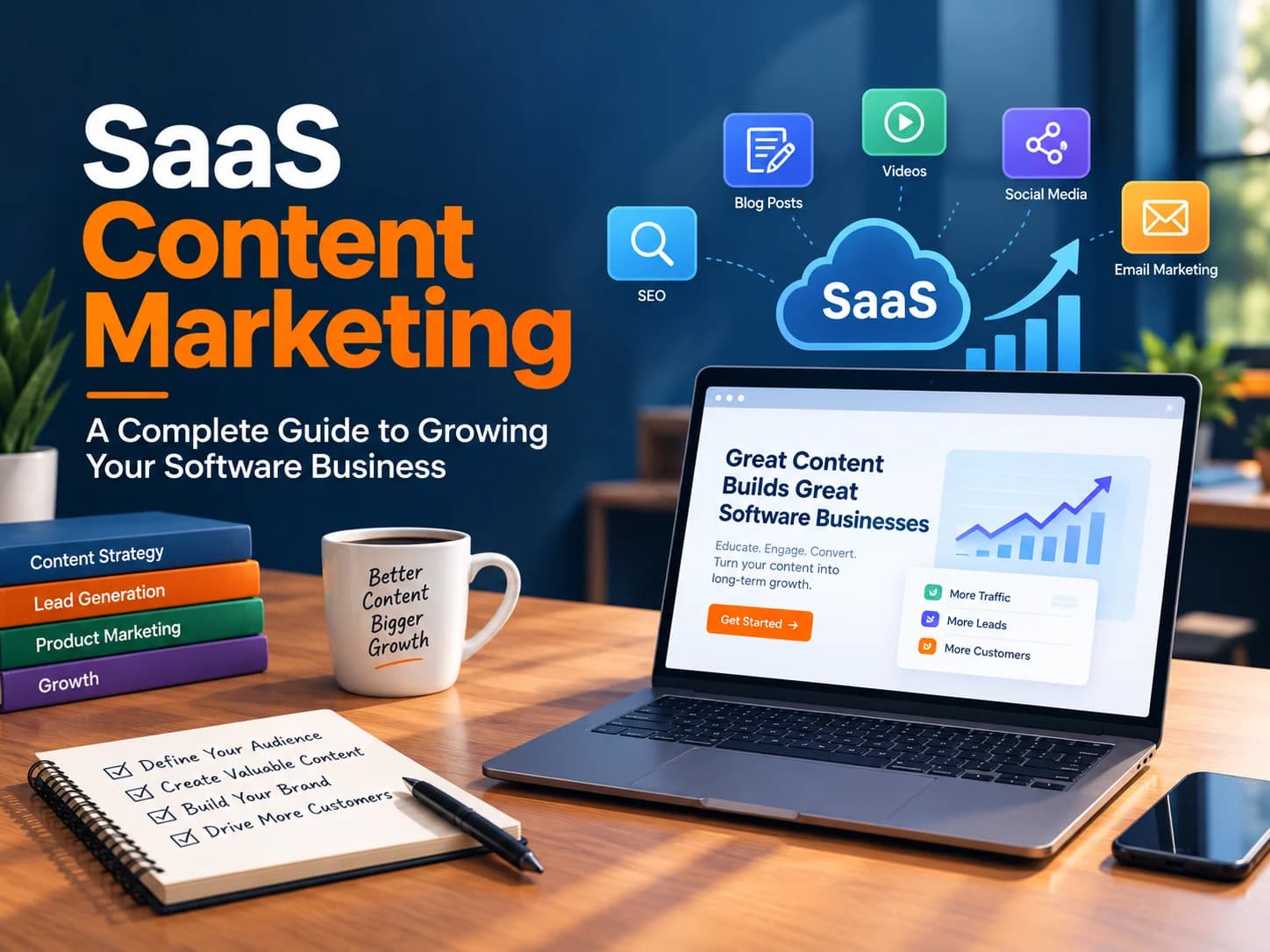 October 26, 202611 min read
SaaS Content Marketing: A Complete Guide to Growing Your Software Business
D
Digital Expert IT
Author
Selling software online is not just about building a great product. People need to understand what your software does, how it solves their problems, and why they should choose it over other options. Without a clear way to communicate that value, even a useful SaaS product can struggle to attract customers.
That's where SaaS content marketing becomes essential.
Instead of relying entirely on paid advertising or direct sales, software companies can use helpful content to educate potential customers, build trust, generate leads, and encourage long-term subscriptions. From SEO blog posts and product tutorials to customer success stories, the right content can support every stage of the customer journey.
In this guide, you'll learn what SaaS content marketing is, why it matters, which strategies work best, and how to build a content plan that supports sustainable business growth.
What Is SaaS Content Marketing?
SaaS content marketing is the process of creating and distributing valuable, relevant content to attract, educate, convert, and retain customers for a Software as a Service (SaaS) business.
Unlike traditional software companies that may focus on one-time purchases, SaaS businesses often depend on recurring subscriptions. That means their content must do more than generate initial interest. It should also help customers understand the product, use its features, and recognize its ongoing value.
Common examples of SaaS content marketing include:
- SEO-optimized blog articles and educational guides
- Product demonstrations and tutorial videos
- Customer testimonials and case studies
- Feature comparison and alternative pages
- Email newsletters and onboarding sequences
- Downloadable templates, reports, and resources
- Social media posts and industry insights
For example, a project management software company might publish an article about improving team productivity, offer a downloadable project planning template, and demonstrate how its software helps teams organize their work.
Each piece of content serves a purpose: helping potential customers move closer to a buying decision.
Why Is SaaS Content Marketing Important?
SaaS buyers rarely subscribe to a product simply because they see an advertisement. They often compare solutions, research features, read reviews, and evaluate whether a product fits their workflow.
Useful content helps answer these questions before a sales conversation even begins.
It attracts qualified traffic. Search-focused content helps your website reach people actively looking for solutions to problems your software addresses.
It builds trust. Detailed tutorials, transparent comparisons, and customer stories demonstrate expertise more effectively than vague promotional messages.
It supports lead generation. Guides, webinars, and free resources can encourage interested visitors to subscribe to a newsletter, request a demo, or start a free trial.
It improves customer retention. Onboarding emails, help articles, and feature tutorials help existing users get more value from their subscriptions.
It creates long-term marketing assets. A well-maintained article can continue attracting relevant visitors long after publication, although rankings and traffic are never guaranteed.
The real advantage comes from treating content as part of the customer experience rather than an isolated blogging activity.
7 SaaS Content Marketing Strategies That Work
1. Build an SEO-Driven Content Strategy
Search engine optimization is one of the most valuable foundations of SaaS content marketing. It helps your business appear when potential customers search for information, comparisons, and solutions related to your product.
Start by researching the questions your ideal customers ask. Organize keywords around their needs rather than choosing topics solely because they have high search volume.
For example, a customer relationship management platform could target topics such as:
- How to manage customer relationships
- Best CRM software for small businesses
- CRM automation for sales teams
- CRM software comparison
- How to improve sales pipeline visibility
Create comprehensive content that answers the searcher's question clearly. Use descriptive headings, relevant internal links, original examples, and a logical structure.
Avoid publishing dozens of similar articles just to target slightly different keywords. Helpful content that demonstrates genuine expertise is a stronger long-term investment than unnecessary publishing volume.
2. Create Content for Every Stage of the Customer Journey
Not every visitor is ready to purchase software immediately. Some are learning about a problem, while others are comparing products or preparing to make a decision.
Your SaaS content strategy should address these different needs.
Awareness stage: Publish educational articles, beginner's guides, and explanatory videos that help readers understand a problem.
Consideration stage: Create comparison articles, detailed feature guides, and use-case content that helps readers evaluate possible solutions.
Decision stage: Use pricing explanations, product demonstrations, customer case studies, and free-trial landing pages to help qualified prospects take action.
For example, someone searching for "what is inventory management software" may need an educational guide. Someone searching for "best inventory management software for ecommerce" is likely evaluating specific solutions.
Matching content to search intent makes your marketing more relevant and can improve the chances of attracting qualified leads.
3. Publish Product-Led Content
Your product should be part of the story whenever it genuinely helps explain the solution.
Product-led content demonstrates how a particular feature solves a real problem instead of merely listing what the software can do.
A scheduling platform could publish a tutorial showing readers how to automate appointment reminders. A finance application could explain how to organize expenses and demonstrate its reporting features.
This approach gives potential customers a clearer understanding of the product before they sign up.
Keep the content educational rather than turning every paragraph into a sales pitch. Show the workflow, explain the outcome, and give readers a relevant next step, such as trying a feature or exploring a product demo.
4. Use Case Studies to Demonstrate Results
SaaS buyers want evidence that a solution can work in a real business environment.
Customer case studies provide that evidence by explaining the customer's original challenge, the solution implemented, and the results achieved.
A strong case study includes the customer's situation, the specific features used, implementation details, and measurable outcomes when reliable data is available.
For example, if a customer reduced manual reporting time after adopting your software, explain the process and document the improvement using verified figures.
Never invent customer results or publish unsupported performance claims. Honest, specific examples are more credible and help potential buyers understand whether your solution fits their needs.
5. Develop an Email Marketing Strategy
Website visitors may need several interactions with your brand before becoming paying customers. Email marketing helps you maintain that relationship without depending entirely on social media algorithms.
A useful SaaS email sequence might include a welcome email, a product setup guide, a feature tutorial, a customer success story, and an invitation to explore a relevant feature.
For existing customers, emails can introduce useful updates, explain new functionality, and share tips that help them achieve better results.
Keep messages relevant to the recipient's stage in the customer journey. A new trial user needs different information from an experienced customer considering an upgraded plan.
6. Repurpose Content Across Multiple Channels
Creating high-quality content takes time, but you don't need to develop every asset from scratch.
One detailed blog post can become several LinkedIn posts, a short educational video, an infographic, an email newsletter, and a downloadable checklist.
For instance, a guide about SaaS automation could be divided into individual posts explaining common automation mistakes, practical workflows, and implementation tips.
Repurposing helps your brand reach people who prefer different formats while making better use of existing research.
However, adapt the content to each platform instead of copying the same text everywhere. A LinkedIn post should be concise and discussion-friendly, while a blog article can explore the subject in greater depth.
7. Measure Content Performance Beyond Traffic
Website traffic matters, but it doesn't tell the whole story.
A SaaS company can attract thousands of visitors without generating meaningful subscriptions. That's why performance measurement should connect content activity to business outcomes.
Track metrics such as:
- Organic traffic to relevant landing pages
- Newsletter subscriptions and qualified leads
- Free-trial registrations and product demos
- Trial-to-paid conversion rates
- Customer acquisition cost
- Content-assisted pipeline and subscription revenue
- Engagement with onboarding and educational content
Use analytics tools and conversion tracking to understand which topics attract the right audience and which pages encourage visitors to take action.
Review the results regularly. Update underperforming articles, strengthen internal links, improve calls to action, and invest more effort in content that supports your business goals.
Common SaaS Content Marketing Mistakes to Avoid
Even a well-funded content program can struggle when the strategy lacks direction.
One common mistake is writing about broad industry topics that attract readers who have little interest in the product. Another is publishing content without a clear next step for interested visitors.
Some companies also focus too heavily on acquisition and neglect existing customers. In a subscription business, educational resources and onboarding content can be just as important as attracting new prospects.
Finally, avoid treating AI-generated content as a substitute for research and expertise. AI tools can support brainstorming, outlining, and editing, but your published content should offer accurate information, useful examples, and genuine value.
A focused strategy built around customer needs is usually more effective than publishing content simply to maintain a busy calendar.
How to Build a SaaS Content Marketing Plan
If you're starting from scratch, keep your initial plan manageable.
First, define your ideal customer and identify the main problems your software solves. Next, research relevant keywords and examine what competing websites cover well—and where their content leaves important questions unanswered.
Choose a small group of priority topics, including educational articles, product-led tutorials, and high-intent comparison pages. Assign each piece a clear objective and a relevant call to action.
Publish consistently, distribute content through appropriate channels, and monitor results over time. As you learn which topics generate qualified leads and product signups, refine your priorities.
Businesses that need support with SEO, content promotion, website performance, and digital growth can explore Digital Expert IT and its range of digital marketing and web development services.
The goal is not to publish the most content. It's to build a useful content system that attracts the right people and helps them become successful customers.
Conclusion
SaaS content marketing is much more than writing blog posts or posting regularly on social media. It's a long-term strategy for helping potential customers discover your software, understand its value, make informed decisions, and continue benefiting from your product.
By combining SEO, product-led content, customer case studies, email marketing, content repurposing, and meaningful performance measurement, SaaS businesses can create a more connected customer journey.
Start with your audience's biggest questions, create genuinely useful resources, and measure how those resources contribute to business growth. Over time, a focused strategy can strengthen your brand, attract qualified prospects, and support sustainable subscription growth.
FAQs About SaaS Content Marketing
1. What is SaaS content marketing?
SaaS content marketing involves creating and distributing useful content to attract potential software customers, generate leads, encourage subscriptions, and help existing users get more value from a product.
2. Why is content marketing important for SaaS companies?
It helps SaaS companies build trust, attract organic search traffic, educate buyers, generate qualified leads, and improve customer onboarding and retention.
3. What are the best SaaS content marketing strategies?
Effective strategies include SEO blogging, product-led tutorials, comparison pages, customer case studies, email marketing, educational videos, and content tailored to different stages of the buyer journey.
4. How do you create a SaaS content marketing strategy?
Start by defining your ideal customer, researching relevant keywords, identifying customer questions, mapping topics to the buying journey, publishing useful content, and measuring leads, conversions, and retention-related outcomes.
5. How does SEO help SaaS content marketing?
SEO helps software companies reach people searching for relevant problems, features, and solutions. Well-optimized, useful pages can attract qualified organic traffic and support customer acquisition over time.
6. What content works best for B2B SaaS companies?
B2B SaaS companies can benefit from in-depth guides, technical tutorials, industry research, comparison pages, integration guides, case studies, and product demonstrations. The best format depends on the audience and buying stage.
7. How often should a SaaS company publish content?
There is no universal publishing frequency. Start with a realistic schedule that allows your team to produce accurate, useful content consistently. Prioritize quality, relevance, distribution, and regular updates over publishing volume alone.
8. How can SaaS companies measure content marketing ROI?
Measure content-related costs against business outcomes such as qualified leads, trial registrations, paid conversions, customer acquisition cost, and revenue influenced by content. Use analytics and attribution data to understand how content contributes to the customer journey.