49/08, Nirala Residential Area, Khulna
contact@digitalexpertit.com
←Back to Articles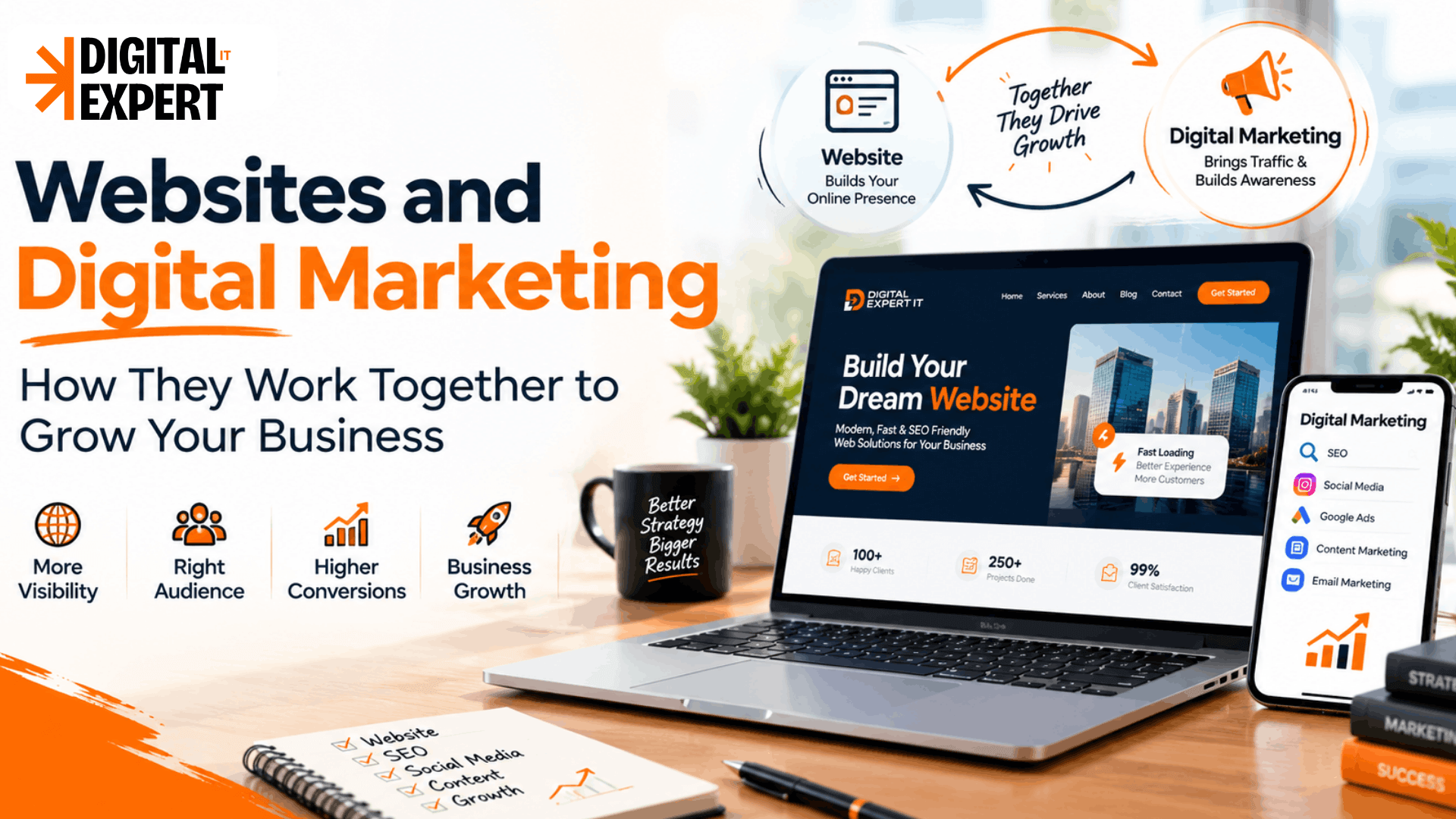 September 6, 20269 min read
Websites and Digital Marketing: How They Work Together to Grow Your Business
D
Digital Expert IT
Author
A business can have a great product, excellent customer service, and competitive pricing, but if people cannot find it online, growth becomes much harder. This is where websites and digital marketing work together.
Your website is more than an online business card. It can be the place where potential customers learn about your company, compare your services, build trust, and eventually decide to contact or buy from you. Digital marketing, on the other hand, helps bring the right people to that website.
When these two areas are planned together, they can create a powerful system for generating visibility, leads, and long-term business growth.
Why Websites Matter in Digital Marketing
Think about your website as the foundation of your online presence.
Social media posts may introduce someone to your brand. A Google search may bring a potential customer to your business. An online advertisement may create initial interest. But in many cases, people will eventually visit your website before making a decision.
That means your website needs to do more than simply look attractive.
A strong business website should be:
- Easy to navigate
- Mobile-friendly
- Fast and secure
- Clear about products or services
- Designed around the customer journey
- Optimized for search engines
- Focused on conversions
If visitors arrive at a website that is slow, confusing, outdated, or difficult to use, even a successful marketing campaign can lose potential customers.
This is why website development and digital marketing should not be treated as completely separate activities.
How Digital Marketing Drives Website Growth
A professionally designed website is valuable, but it cannot generate consistent results if nobody discovers it.
That is where digital marketing comes in.
Digital marketing includes several strategies that can help businesses reach potential customers online. Depending on the business and target audience, these can include search engine optimization, social media marketing, Google Ads, paid social advertising, content marketing, email marketing, video marketing, and conversion optimization.
For example, SEO can help your website appear when people search for services related to your business. Social media can introduce your brand to new audiences. Paid advertising can generate targeted traffic quickly, while content marketing can answer customer questions and establish your expertise.
The goal isn't simply to get more visitors.
The real goal is to attract the right visitors and give them a reason to take the next step.
SEO Connects Websites and Digital Marketing
Search engine optimization is one of the strongest connections between websites and digital marketing.
Imagine someone searches for a service that your company provides. If your website has useful content, a clear structure, relevant information, strong technical performance, and pages that satisfy the searcher's intent, it has a better opportunity to compete in search results.
But SEO is not about repeating a keyword dozens of times.
Modern SEO should focus on answering real questions and providing useful information. Content should be written for people first while still making it easy for search engines to understand the topic.
This means businesses should consider:
- Search intent
- Keyword research
- Helpful website content
- Internal linking
- Page titles and headings
- Technical SEO
- Mobile usability
- Website speed
- Quality backlinks
- Clear calls to action
A good SEO strategy therefore improves both search visibility and the experience people have after reaching your website.
Your Website Should Turn Traffic Into Customers
Getting website traffic is only one part of digital marketing.
What happens after someone arrives?
This is where conversion optimization becomes important.
Suppose 5,000 people visit your website in a month, but only a few contact your business. The problem may not be traffic. It could be the website experience.
A conversion-focused website makes it easy for visitors to understand what you offer and what they should do next.
Effective calls to action might include:
Get a Quote, Book a Consultation, Request a Demo, Contact Us, or Start Your Project.
Your website should also communicate the benefits of your services clearly. Instead of filling every page with complicated technical language, explain how your product or service solves a real customer problem.
Trust signals can also make a major difference. Testimonials, case studies, reviews, portfolio examples, certifications, transparent information, and professional branding can help reduce uncertainty before a customer makes contact.
Social Media and Your Website Should Work Together
Social media is another important part of the relationship between websites and digital marketing.
Platforms such as Facebook, Instagram, LinkedIn, TikTok, and YouTube can help businesses reach people where they already spend time online.
However, social media should not always be treated as the final destination.
A social media post can create curiosity. A video can demonstrate a product. A carousel can educate an audience. A short-form video can capture attention.
Your website can then provide the deeper information needed to make a purchasing decision.
For example, a company could publish an Instagram video explaining a common customer problem and direct interested viewers to a detailed service page. The social platform creates awareness, while the website handles education, trust, and conversion.
That creates a connected digital marketing journey instead of isolated marketing activities.
Paid Advertising Can Accelerate Results
Organic marketing can take time. Paid advertising can help businesses reach targeted audiences faster.
Google Ads can put your business in front of people actively searching for specific products or services. Social media advertising can target audiences based on factors such as interests, demographics, behaviors, and previous interactions.
But sending paid traffic to a poorly designed website can waste your advertising budget.
The landing page needs to match the advertisement, load quickly, communicate the offer clearly, and make the next action obvious.
This is why advertising, website design, analytics, and conversion optimization should be considered part of the same strategy.
Content Marketing Builds Long-Term Visibility
Content is another bridge between websites and digital marketing.
Blog articles, guides, case studies, videos, FAQs, and educational resources can help answer the questions potential customers have before buying.
For example, a web development company could publish articles about website performance, eCommerce development, SEO, cybersecurity, or website conversion strategies.
Over time, useful content can attract search traffic, support social media campaigns, strengthen brand authority, and give sales teams valuable resources to share with prospects.
The important thing is to avoid creating content simply because a keyword has search volume. Each piece should have a clear purpose and provide genuine value to the intended audience.
Choosing the Right Websites and Digital Marketing Strategy
There is no single digital marketing strategy that works for every business.
A local service provider may benefit heavily from local SEO and Google Ads. An eCommerce company might prioritize SEO, shopping campaigns, social media advertising, email marketing, and conversion optimization. A B2B company may focus more on LinkedIn, educational content, SEO, case studies, and lead-generation campaigns.
The right approach starts with understanding:
- Who your ideal customers are
- What problems they need to solve
- Where they search for information
- What makes them trust a business
- Which services or products are most profitable
- What action you want visitors to take
From there, your website and marketing channels can be built around the same business objectives.
For businesses looking to combine professional website development with a strategic digital marketing approach, Digital Expert IT provides solutions designed to help businesses build and grow their online presence.
You can also explore the company's digital marketing and web solutions to see how different services can work together as part of a broader growth strategy.
Final Thoughts
Websites and digital marketing are most effective when they work as one connected system.
Your website provides the foundation. SEO helps people discover it. Social media builds awareness. Paid advertising can bring targeted visitors. Content develops trust. Conversion optimization turns interest into action.
Instead of thinking about each channel separately, businesses should look at the complete customer journey—from the first search or social media interaction to the website visit and final conversion.
A beautiful website without marketing may remain invisible. Marketing without a strong website may struggle to convert attention into business.
When both are planned strategically, they can create a stronger online presence, better customer experiences, and more opportunities for sustainable growth.
Frequently Asked Questions About Websites and Digital Marketing
1. What is the connection between websites and digital marketing?
A website acts as the central destination for many digital marketing activities. SEO, social media, advertising, content marketing, and email campaigns can send visitors to the website, where they can learn about the business and take actions such as making a purchase, booking a service, or submitting an inquiry.
2. Why is a website important for digital marketing?
A website gives a business control over its online presence and provides a place where customers can find detailed information about products and services. A well-designed website can also improve credibility, generate leads, support SEO, and convert marketing traffic into customers.
3. Can digital marketing work without a website?
Some digital marketing activities can operate without a traditional website, especially social media marketing. However, having a professional website gives businesses a central platform for providing detailed information, building trust, collecting leads, publishing content, and supporting long-term SEO.
4. How does SEO help websites and digital marketing?
SEO helps improve a website's visibility when people search for relevant products, services, or information. It can attract targeted organic traffic and support other marketing activities by bringing potential customers to useful website pages.
5. What digital marketing strategy is best for a small business?
There is no universal strategy. Small businesses should choose channels based on their target audience, location, industry, budget, and goals. SEO, local search optimization, social media marketing, content creation, and targeted paid advertising can all be useful when properly planned.
6. How long does digital marketing take to produce results?
The timeline depends on the strategy. Paid advertising can produce traffic and leads relatively quickly, while SEO and content marketing generally require more time to build visibility and authority. Consistent optimization and measurement are important for long-term results.
7. Should website design and digital marketing be done together?
Yes. Building a website with marketing goals in mind can improve SEO, user experience, tracking, landing pages, calls to action, and conversion rates. Integrating both from the beginning can also prevent expensive redesigns later.
8. How can I improve my website for digital marketing?
Start by making sure your website is mobile-friendly, fast, easy to navigate, secure, search-engine friendly, and focused on clear customer actions. Add useful content, strong calls to action, trust signals, analytics, and well-optimized service or product pages.