49/08, Nirala Residential Area, Khulna
contact@digitalexpertit.com
←Back to Articles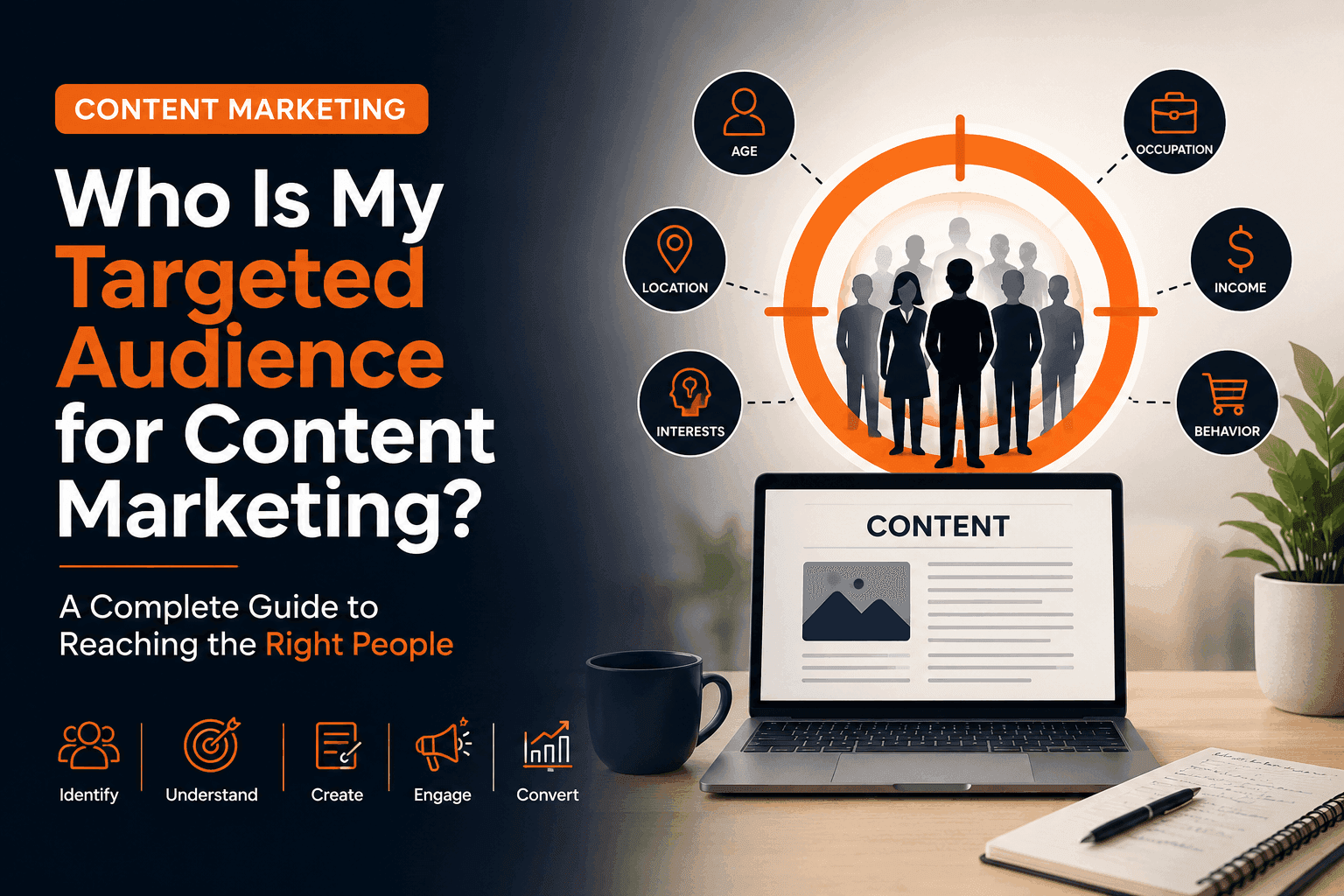 July 10, 20267 min read
Who Is My Targeted Audience for Content Marketing? A Complete Guide to Reaching the Right People
D
Digital Expert IT
Author
Creating great content is only half the battle. The other half is making sure the right people actually see it.
Many businesses publish blogs, videos, and social media posts every week but still struggle to generate leads or sales. The biggest reason? They're creating content for everyone instead of focusing on a specific audience.
If you've ever asked yourself, "Who is my targeted audience for content marketing?", you're asking one of the most important questions in digital marketing. Understanding your audience helps you create content that attracts qualified visitors, builds trust, and converts readers into customers.
In this guide, you'll learn how to identify your target audience, why it matters, and how businesses can use audience-focused content to grow consistently.
What Is a Target Audience in Content Marketing?
A target audience is the specific group of people who are most likely to benefit from your products or services. These are the people your content should educate, inspire, and persuade.
Rather than creating generic articles that appeal to everyone, successful businesses focus on solving the problems of a clearly defined audience.
For example:
- A web development agency targets business owners who need a professional website.
- A fitness coach targets people looking to lose weight or improve their health.
- A real estate agent targets home buyers and property investors.
- A law firm targets people seeking legal advice.
The more specific your audience is, the more effective your content becomes.
Why Knowing Your Audience Matters
Understanding your audience impacts every part of your marketing strategy.
When you know who you're speaking to, you can:
- Write content that answers real questions.
- Improve your search engine rankings.
- Increase engagement on social media.
- Build trust with potential customers.
- Generate higher-quality leads.
- Improve conversion rates.
Instead of guessing what people want, you'll create content that directly addresses their needs.
How to Identify Your Target Audience
Finding your ideal audience doesn't have to be complicated. Start with these simple steps.
1. Understand Your Products or Services
Ask yourself:
- What problem do I solve?
- Who experiences this problem?
- Who would benefit most from my solution?
For example, if you provide SEO services, your audience could include:
- Small business owners
- E-commerce stores
- Local service providers
- Startup founders
- Marketing managers
The goal is to identify who needs your expertise the most.
2. Research Your Existing Customers
Your current customers provide valuable insights.
Look at:
- Age
- Location
- Industry
- Business size
- Common challenges
- Buying behavior
You'll often notice patterns that help define your ideal customer profile.
3. Analyze Your Competitors
Study businesses that serve a similar audience.
Look at:
- Their blog topics
- Social media engagement
- Popular content
- Customer comments
- Frequently asked questions
This research helps you discover what your audience is already searching for.
4. Use Keyword Research
Search engines reveal exactly what people want.
Use SEO tools to discover questions such as:
- Who is my targeted audience for content marketing?
- How do I find my target audience?
- Why is audience research important?
- What is audience segmentation?
These keywords help you create content that aligns with user intent.
Create Audience Personas
A buyer persona is a fictional representation of your ideal customer.
Here's an example:
Name: Sarah
Age: 34
Occupation: Small Business Owner
Goals:
- Increase online visibility
- Generate more leads
- Improve website performance
Challenges:
- Limited marketing budget
- Low Google rankings
- No content strategy
Creating personas helps your content feel more personal and relevant.
Types of Target Audiences
Businesses often serve multiple audience segments.
Some common categories include:
Demographic
Based on:
- Age
- Gender
- Income
- Education
- Occupation
Geographic
Based on:
- Country
- City
- Region
- Local market
This is especially important for local SEO.
Behavioral
Focuses on customer actions, including:
- Purchase history
- Website activity
- Brand loyalty
- Search intent
Psychographic
Looks at:
- Interests
- Values
- Lifestyle
- Motivations
Understanding these factors helps create content that connects emotionally.
Signs You're Targeting the Wrong Audience
Many businesses unknowingly create content for people who will never become customers.
Common warning signs include:
- High website traffic but very few inquiries
- Low engagement on blog posts
- High bounce rates
- Poor conversion rates
- Visitors leaving quickly
If these issues sound familiar, it's time to revisit your audience strategy.
How Audience Research Improves SEO
Google rewards content that satisfies user intent.
When you understand your audience, you naturally create articles that answer their questions more effectively.
This leads to:
- Higher rankings
- Longer session durations
- Lower bounce rates
- More backlinks
- Better user experience
Search engines prioritize helpful content that genuinely solves problems.
Content Types for Different Audiences
Different audiences prefer different content formats.
For beginners:
- Educational blog posts
- Checklists
- Beginner guides
For decision-makers:
- Case studies
- Service comparisons
- ROI-focused articles
For existing customers:
- Tutorials
- Product updates
- Advanced strategies
Diversifying your content keeps every stage of the customer journey engaged.
Common Mistakes Businesses Make
Avoid these mistakes when building your content strategy:
- Trying to target everyone.
- Ignoring keyword research.
- Publishing inconsistent content.
- Focusing only on products instead of customer problems.
- Not updating older content.
- Skipping audience feedback.
Successful content marketing always starts with understanding people—not just search engines.
Build a Content Strategy Around Your Audience
Once you've identified your target audience, create a consistent publishing plan.
Your strategy should include:
- Keyword-focused blog posts
- Educational resources
- SEO optimization
- Internal linking
- Regular content updates
A well-planned strategy builds authority over time and attracts qualified visitors consistently.
Businesses looking to improve their online visibility with SEO, content marketing, web development, and digital marketing strategies can explore the professional solutions offered by Digital Expert IT.
For organizations seeking customized digital marketing, SEO, website development, and business growth services, browse the complete range of solutions available on the services page.
Conclusion
Understanding who your targeted audience is for content marketing is the foundation of every successful digital marketing strategy.
The better you understand your audience's needs, goals, and challenges, the easier it becomes to create content that earns trust, ranks on Google, and drives meaningful business results.
Instead of producing content for everyone, focus on the people who genuinely need your expertise. Use audience research, keyword analysis, customer feedback, and buyer personas to guide every piece of content you publish.
When your content consistently answers the right questions for the right people, search engines reward your website—and potential customers are far more likely to choose your business.
Frequently Asked Questions (FAQs)
1. What is a targeted audience in content marketing?
A targeted audience is the specific group of people most likely to benefit from your products or services. Your content should be created specifically to solve their problems and answer their questions.
2. Why is identifying a target audience important?
Knowing your audience helps improve SEO, increase engagement, generate qualified leads, and create content that converts visitors into customers.
3. How can I identify my target audience?
Start by analyzing your existing customers, researching competitors, studying keyword trends, creating buyer personas, and understanding the problems your business solves.
4. Can a business have more than one target audience?
Yes. Many businesses serve multiple customer segments. Creating separate content for each audience often improves engagement and conversion rates.
5. How does audience research help SEO?
Audience research reveals what people are searching for, allowing you to create relevant, high-quality content that matches search intent and improves Google rankings.
6. What is a buyer persona?
A buyer persona is a fictional profile of your ideal customer based on research, including demographics, goals, interests, and challenges.
7. How often should I review my target audience?
Review your audience every six to twelve months or whenever your products, services, or market conditions change to ensure your content remains relevant.
8. What types of content work best for different audiences?
Educational blogs, videos, case studies, how-to guides, comparison articles, and FAQs all perform well when tailored to the needs and search intent of your specific audience.