49/08, Nirala Residential Area, Khulna
contact@digitalexpertit.com
←Back to Articles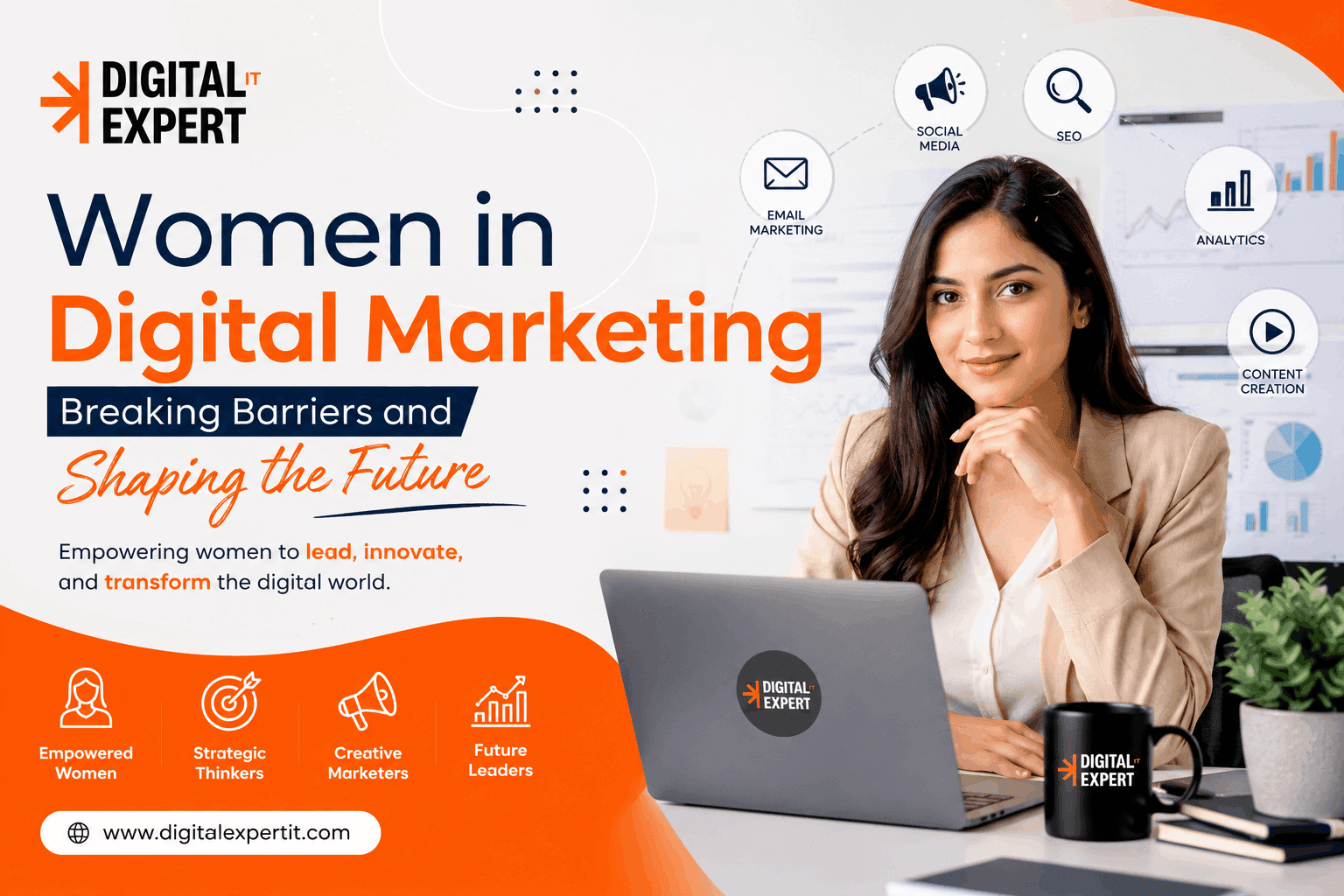 August 21, 20268 min read
Women in Digital Marketing: Breaking Barriers and Shaping the Future
D
Digital Expert IT
Author
Digital marketing has changed the way businesses connect with customers, build brands, and generate revenue. At the heart of this transformation are talented professionals bringing creativity, strategy, technology, and fresh perspectives to the industry. Among them, women in digital marketing are playing an increasingly important role.
From social media managers and SEO specialists to content creators, paid advertising experts, entrepreneurs, and marketing leaders, women are building successful careers and businesses across the digital landscape. More importantly, they are helping shape what the future of marketing looks like.
The Growing Role of Women in Digital Marketing
Marketing has long provided opportunities for creative and communication-focused professionals, but the rise of digital platforms has created even more career paths.
Today, women can work in areas such as:
- Search engine optimization (SEO)
- Social media marketing
- Content marketing
- Email marketing
- Google and social media advertising
- Influencer marketing
- Video marketing
- Brand strategy
- Marketing analytics
- E-commerce marketing
- Digital marketing management
The flexibility of digital work has also opened doors for freelancers, remote professionals, consultants, and women entrepreneurs.
According to the American Marketing Association, women account for around 60% of marketers in the United States whose gender is specified, showing how significant female participation has become in the marketing profession.
This representation matters because digital marketing is not simply about selling a product. It is about understanding people, communicating ideas, solving problems, and creating meaningful connections between brands and audiences.
Why Women Are Thriving in Digital Marketing
There is no single skill that makes someone successful in marketing. The industry requires a combination of creativity, analytical thinking, communication, adaptability, and curiosity.
Many successful women in digital marketing have built their careers by combining these skills.
1. Strong Communication Skills
Digital marketing depends heavily on communication. Whether writing social media content, creating an advertising campaign, developing a video script, or communicating with clients, marketers need to understand how to express ideas clearly.
Women who develop strong storytelling and communication skills can use them across multiple digital marketing channels.
2. Creativity and Content
Content is one of the most important parts of modern digital marketing.
Blog posts, short-form videos, social media campaigns, graphics, emails, and branded content all compete for audience attention. Women working in digital marketing are contributing heavily to creative campaigns that make brands more relatable and memorable.
Creativity is especially valuable when businesses need to stand out in crowded markets.
3. Understanding the Audience
Successful marketing begins with understanding the customer.
Women marketers often work closely with audience research, community management, social media conversations, and customer feedback. These experiences can help marketers understand what audiences actually want rather than simply focusing on what a business wants to sell.
That customer-focused mindset can lead to better campaigns and stronger brand relationships.
Women in Digital Marketing Leadership
The conversation around women in digital marketing is not limited to entry-level or specialist roles. Women are increasingly moving into leadership positions where they influence marketing strategy, budgets, teams, and business growth.
Recent industry research shows that women have reached significant levels of representation among senior marketing leaders, although representation and decision-making power are not always the same thing.
Leadership requires more than technical marketing knowledge. It involves decision-making, team management, strategic thinking, negotiation, and the confidence to take responsibility for results.
For women aiming to become marketing leaders, developing these business skills alongside digital expertise can make a major difference.
Challenges Women Still Face
Despite the progress, women in digital marketing can still encounter challenges.
Competition is intense, especially for senior positions. Women may also face unequal opportunities, limited access to leadership networks, workplace bias, or pressure to prove themselves repeatedly.
Another challenge is the speed at which digital marketing changes.
AI, automation, search algorithm updates, social media trends, analytics platforms, and new advertising technologies are constantly changing the skills marketers need. The American Marketing Association's 2026 career research highlights AI fluency as an increasingly important baseline skill for marketing professionals.
For women building long-term careers, continuous learning is therefore essential.
How Women Can Build a Successful Digital Marketing Career
A successful career does not require mastering everything at once. Instead, focus on building a strong foundation and gradually developing specialized expertise.
Build One Core Skill
Start with an area such as SEO, paid advertising, social media, content marketing, email marketing, or video marketing.
Once you become confident in one discipline, you can expand into related areas.
Create a Portfolio
A portfolio can be more powerful than simply listing skills on a resume.
Show real examples of campaigns, content, website improvements, social media growth, advertising results, SEO projects, or other marketing work. If you do not have client projects yet, create sample campaigns for imaginary brands.
Learn Analytics
Creativity gets attention, but data helps marketers make better decisions.
Learn how to understand metrics such as traffic, engagement, conversion rate, cost per acquisition, return on ad spend, and customer acquisition cost.
Develop AI Skills
AI is becoming part of everyday marketing workflows. Women marketers who learn how to use AI responsibly for research, brainstorming, content assistance, analysis, automation, and workflow improvement can remain competitive as the industry evolves.
The goal should not be to replace creativity with AI. Instead, use technology to reduce repetitive work and create more time for strategic thinking.
Build a Professional Network
Networking can create opportunities that skills alone may not provide.
Connect with other marketers, business owners, entrepreneurs, mentors, and industry professionals through LinkedIn, professional communities, events, and online groups.
Sharing knowledge and experiences can also help women support other women entering the field.
The Future of Women in Digital Marketing
The future looks promising, but continued progress requires more than increasing the number of women entering marketing. Businesses also need to create environments where women can grow into senior positions, lead teams, make important decisions, and receive opportunities based on their skills and performance.
Digital marketing itself is also becoming more technical. AI, automation, data analytics, personalization, video, and emerging digital channels will continue changing the profession.
This creates an opportunity for women who are willing to combine creativity with technology.
For businesses looking to strengthen their online presence, having a skilled and diverse marketing team can bring different perspectives to campaigns and customer communication. Whether the goal is improving SEO, running paid advertising, growing social media accounts, or producing engaging video content, digital marketing expertise can directly support business growth.
At Digital Expert IT, businesses can explore digital solutions designed to strengthen their online presence and connect with their target audiences more effectively. From marketing and content services to web development and digital solutions, the right combination of strategy and technology can help brands compete in an increasingly digital marketplace.
Conclusion
The story of women in digital marketing is a story of opportunity, innovation, and continued progress. Women are not only participating in the industry—they are creating campaigns, building brands, leading teams, launching businesses, and influencing the future of digital communication.
For women considering a career in this field, there has never been a better time to start learning. Choose a specialization, build practical experience, develop your portfolio, understand data, embrace emerging technology, and keep improving.
The digital marketing industry will continue to evolve. The professionals who stay curious, adaptable, and willing to learn will be best positioned to grow with it.
FAQs About Women in Digital Marketing
1. What is women in digital marketing?
Women in digital marketing refers to female professionals working across areas such as SEO, social media, paid advertising, content marketing, email marketing, video marketing, analytics, branding, and digital strategy.
2. Is digital marketing a good career for women?
Yes. Digital marketing offers diverse career paths, including full-time employment, freelancing, consulting, entrepreneurship, and remote work. Professionals can also specialize in areas that match their interests and strengths.
3. What skills do women need for a career in digital marketing?
Important skills include communication, content creation, SEO, social media management, advertising, analytics, creativity, strategic thinking, and adaptability. AI and automation skills are also becoming increasingly valuable.
4. How can women start a career in digital marketing?
Start by learning one core area such as SEO, social media marketing, content marketing, or paid advertising. Then build practical projects, create a portfolio, gain experience, and connect with other professionals.
5. Can women work remotely in digital marketing?
Yes. Many digital marketing roles can be performed remotely, including content creation, SEO, social media management, advertising, email marketing, analytics, and consulting.
6. How can women advance into digital marketing leadership?
Develop both marketing and business skills. In addition to technical expertise, focus on communication, strategic planning, budgeting, leadership, team management, decision-making, and measurable business results.
7. What is the future of women in digital marketing?
The future is increasingly connected to AI, automation, data, video, personalization, and digital commerce. Women who continuously develop both technical and strategic skills can take advantage of emerging opportunities.
8. Where can businesses find digital marketing services?
Businesses looking for professional digital marketing, web development, SEO, advertising, social media, and related solutions can explore Digital Expert IT's services to learn more about available digital solutions.